中文简体
中文简体 English
 Español
Content
When a project specification for an RF feeder line shows two "equivalent" cables — one with a corrugated copper outer conductor and one with a corrugated aluminum outer conductor — the first reaction is to compare copper vs aluminium conductivity. The numbers make the difference clear: copper conducts better. But the right engineering choice depends on more than conductivity. Weight, strength, termination behaviour, installation loads, and total ownership cost all have a say. This article walks through the key comparisons and gives practical guidance for cable selection.
What the conductivity numbers really tell you
Electrical conductivity is usually quoted as a percentage of the International Annealed Copper Standard (IACS). Annealed copper is defined as 100 percent IACS, while aluminium sits at roughly 61 percent. That means a pure aluminium conductor has about 61 percent of copper's conductivity for the same cross-sectional area. If you want to carry the same current with the same temperature rise, the aluminium conductor needs a cross-section roughly 1.64 times larger than copper.
| Property | Copper | Aluminium |
|---|---|---|
| Electrical conductivity | ~100% IACS | ~61% IACS |
| Resistivity (µΩ·cm) | 1.72 | 2.82 |
| Density (g/cm³) | 8.96 | 2.70 |
| Relative mass for equal DC resistance | 1.0 | ~0.5 |
| Tensile strength (soft annealed, MPa) | ~220 | ~80 |
The table makes the trade-off visible. In a fixed conduit, copper gives you the lowest resistance in the smallest cross-section. In an overhead line, where support structures and sag are dominant, aluminium's weight advantage can be more valuable than its lower conductivity. The 61 percent figure is not a safety limit; it is a design input. A cable system using aluminium must be sized for the actual resistance of the installed route.
Why weight and strength change the decision
Aluminium has a density of about 2.70 g/cm³, roughly one-third of copper's 8.96 g/cm³. When you compare conductors with equal DC resistance, the aluminium version is thicker but still about half the mass of the copper version. This is why aluminium is the default material for bare overhead power conductors. It also appears in large busbar systems and in weight-sensitive RF assemblies where cables are hung from towers or mast structures.
Copper is not only denser; it is also mechanically stronger. Soft annealed copper has a tensile strength of around 220 MPa, while soft aluminium sits near 80 MPa. Copper resists repeated bending and handles the forces of compression connectors without excessive creep. Aluminium is softer and can deform at terminations unless the connection is designed for its material properties. In flexible cables, copper's ductility is a clear advantage. Aluminium can be worked, but it fatigues more quickly under repeated bending, which is why most flexible RF jumpers and instrumentation cables use copper conductors.
Terminations, oxide films, and corrosion behaviour
Conductivity comparisons often stop at the metal's resistance. But the long-term performance of an electrical connection depends on how the surface behaves. Copper maintains a reasonably stable, solderable surface. Aluminium, however, immediately forms an insulating oxide film. A standard copper connector is not adequate for aluminium unless the joint is prepared with the right inhibitor and the correct tooling to break the oxide and keep air away. An aluminium conductor also needs a larger contact area at every joint because of its lower conductivity, so lugs and connectors are physically bigger for the same current rating.
In coastal or humid environments, corrosion resistance matters. Copper is more noble and less reactive; aluminium relies on a protective oxide layer that resists further oxidation. The danger occurs when aluminium meets copper in the same joint, because galvanic corrosion can attack the aluminium side. For this reason, a cable system using an aluminium outer conductor must pay careful attention to sealing and to connector metallurgy. Experienced installers know that an aluminium connection is not a set-and-forget joint; it needs a specified torque and periodic checks in high-load circuits.
Where copper and aluminium each make sense in cable systems
For short interconnects, branch wiring, and high-frequency signal paths, copper usually wins. Its lower resistance cuts attenuation and its strength suits repeated handling. Aluminium is attractive for long-distance feeders, high-voltage transmission, and any installation where weight or raw material cost is the dominant constraint. To decide which conductor fits a communication system, it helps to understand the difference between high-frequency cables and ordinary cables.
Here is a simple way to classify the typical choices:
- Copper: branch circuits, internal wiring, connectors, RF jumpers, and any application with repeated flexing.
- Aluminium: overhead lines, long distribution feeders, large busbars, and non-flexing fixed installations.
In the world of coaxial cable, both metals are found. Small-diameter cables often use copper braid because it is easy to terminate and highly flexible. Larger feeder cables frequently use corrugated aluminium tube to reduce the load on tower-mounted antennas and to lower the cost per metre.
Copper vs aluminium in coaxial cable outer conductors
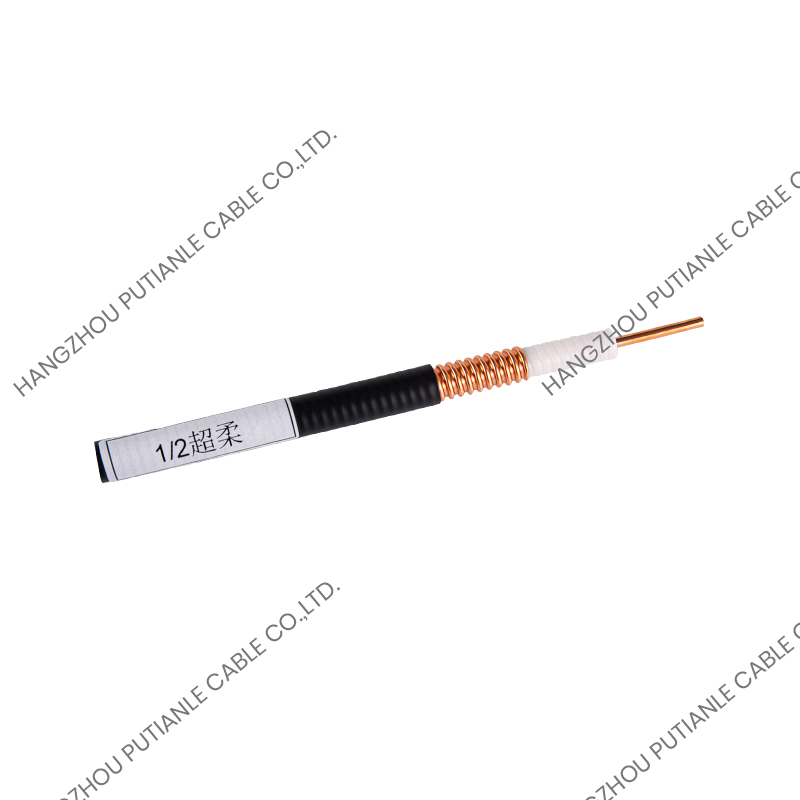
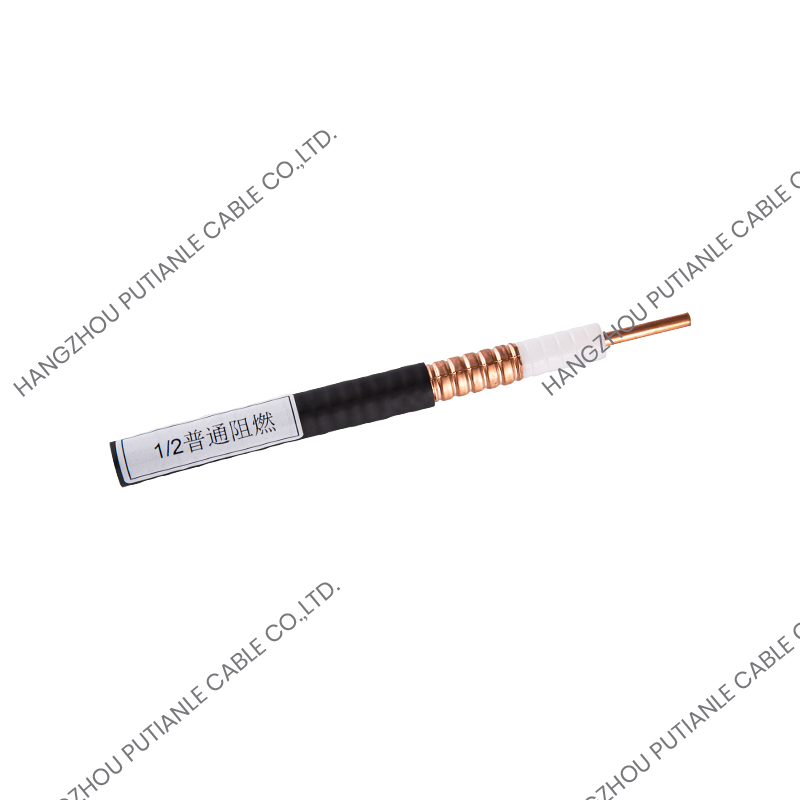
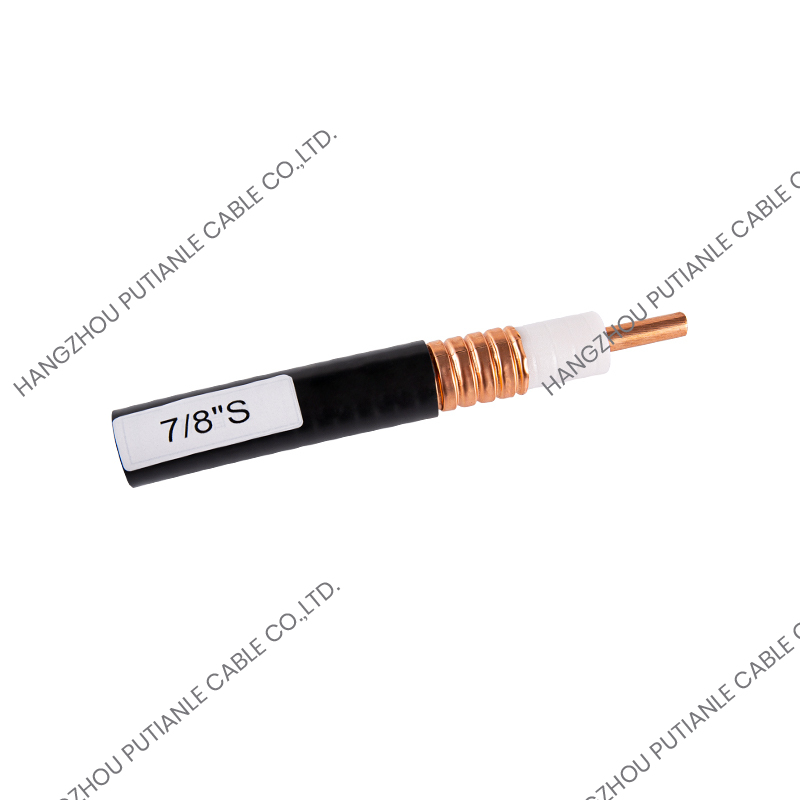
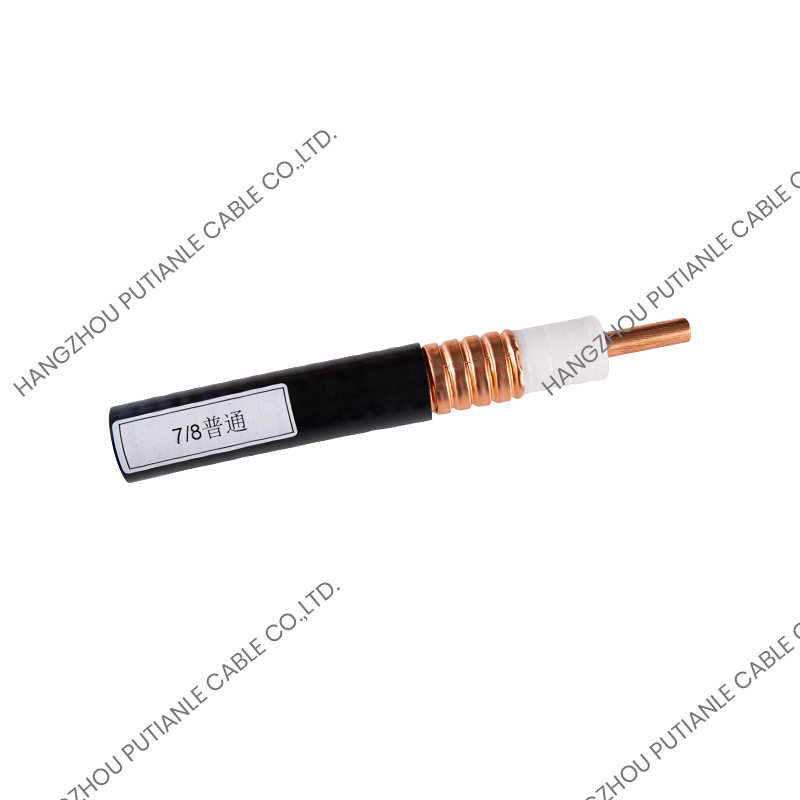
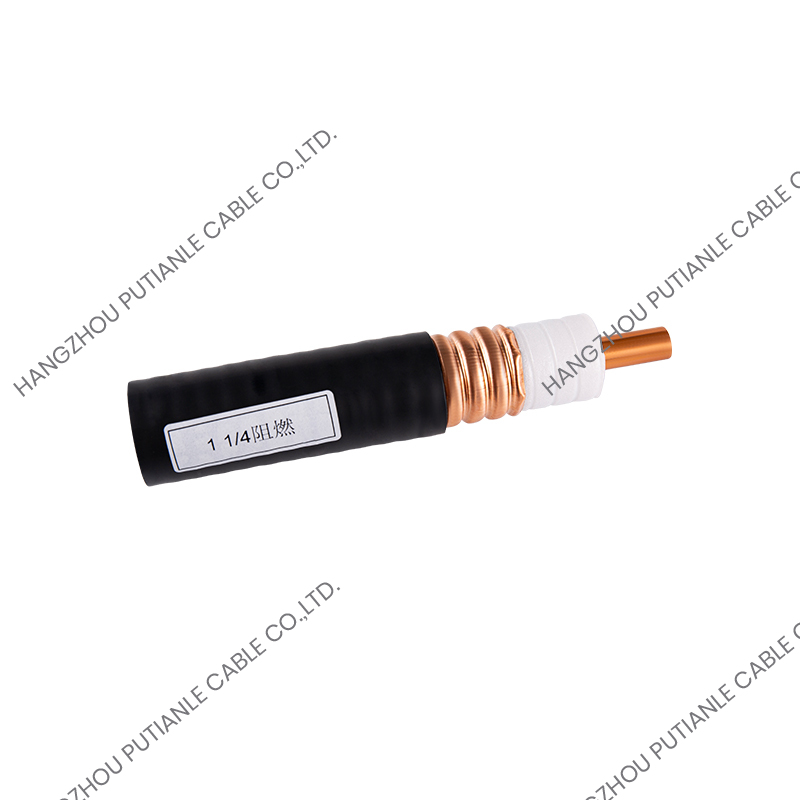
In coaxial cable production, the outer conductor is part of the RF circuit, not just a shield. A corrugated copper tube provides low series resistance, a stable impedance, and good soldering compatibility. For fixed feeder runs where attenuation must be minimised, copper is often the first choice. A corrugated aluminum tube offers a lighter alternative with acceptable electrical performance and a lower material cost, making it attractive when the mechanical load on towers and cable trays is a limiting factor.
At Hangzhou Putianle Cable, both options are part of the product range. The 7-8 low-loss annular corrugated copper tube coaxial cable is designed for installations where low attenuation and stable return loss take priority. When weight and budget are the primary constraints, the 7-8 low-loss corrugated aluminum tube coaxial cable provides a practical balance of performance and economy.
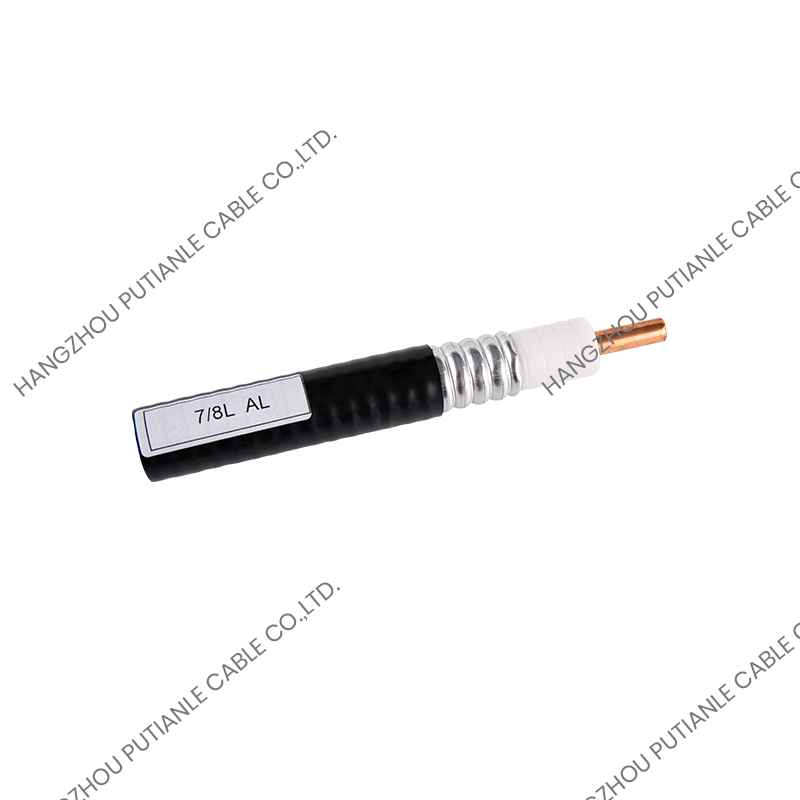 7/8" Low Loss Corrugated Aluminum Tube 50 Ohm Coaxial Cable Manufacturers, CustoHangzhou Putianle Cable Co., Ltd. is China Custom 7/8 inch Low Loss Corrugated Aluminum Tube 50 Ohm Coaxial Cable Manufacturers,Company,T...View Product →
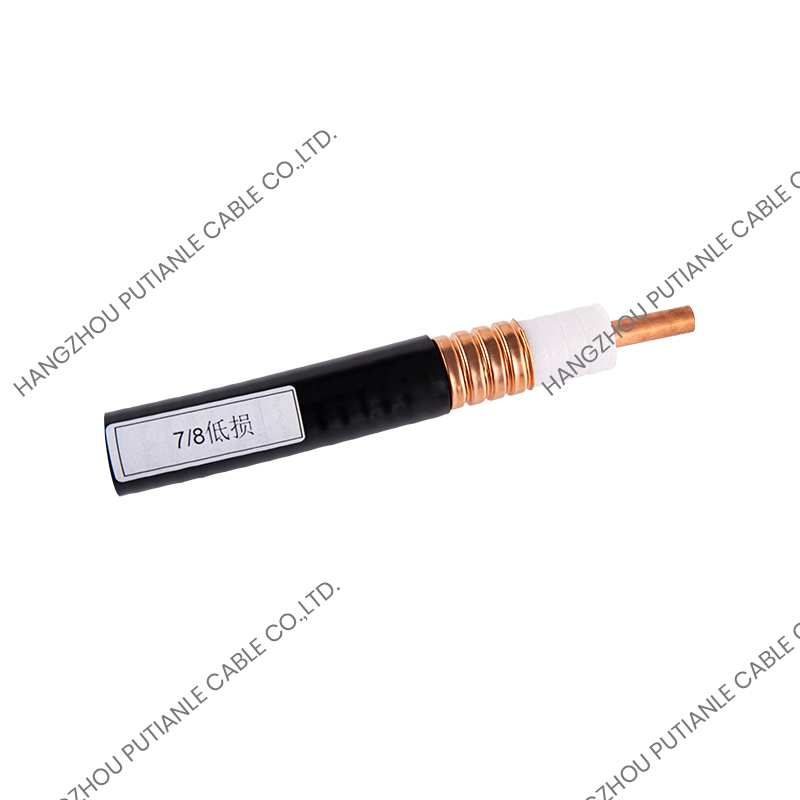 7/8" Low Loss Annular Corrugated Copper Tube 50 Ohm Coaxial Cable Manufacturers,Hangzhou Putianle Cable Co., Ltd. is China Custom 7/8 inch Low Loss Annular Corrugated Copper Tube 50 Ohm Coaxial Cable Manufacturers,Com...View Product →
The choice between copper and aluminium outer conductors is therefore a system-level decision. A low-loss copper-tube feeder may save a fraction of a decibel per hundred metres compared with an equal-diameter aluminium-tube feeder. Over a long run, that improvement can matter in a tight link budget. Yet the aluminium cable may be easier to install on a roof or tower because of its lower weight. Both designs are available from Putianle, and the data sheets for each product show attenuation curves that allow a direct comparison.
Practical guidance for cable buyers
Start with the system requirement, not the metal. If attenuation, compactness, and connection simplicity are the priorities, choose copper. If weight, cost, or installation tension dominate, choose aluminium and confirm that every connector, splice, and lug is designed for aluminium. Both conductors are reliable when the whole connection system is engineered for them. Copper vs aluminium conductivity is not a contest with a single winner; it is a material decision that should be made against a specific application.