中文简体
中文简体 English
 Español
Content
Picture a factory floor in a metalworking plant. A CCTV camera watches the loading dock, and the image is clean until the overhead crane's variable-frequency drive starts. The monitor shows rolling bars, and the recorder logs dropouts. The same story repeats in countless sites: the interference is real, but it rarely comes from the camera or the recorder. It comes from the cable path between them.
The conclusion that holds across most field investigations is simple: when a coaxial cable picks up electromagnetic interference, the fault is almost always a shield discontinuity, a grounding mistake, or a shield construction that is too light for the environment. Correct those three points, and the cable will reject external fields effectively.
Where Electromagnetic Interference Enters a Coaxial Cable
Coaxial cable is designed to be immune to external electromagnetic fields. The center conductor carries the signal, and the outer conductor, the shield, surrounds it along the entire length. An external field induces current on the outside of the shield, and if the shield is continuous and properly grounded, that current never reaches the inner conductor. Interference enters through the holes in this arrangement.
The most common holes are mechanical:
- A sharp bend or a crushed section opens gaps between braid strands.
- A connector crimped over unevenly distributed braid leaves a circumferential slot.
- A nick in the jacket lets moisture attack the braid, and corroded braid loses both conductivity and coverage.
These are not exotic failures; they are the everyday results of hasty stripping, low-quality crimp tools, and cables pulled tight through sharp edges.
The external side of the problem is equally predictable. Variable-frequency drives, switching power supplies, electric motors, welding equipment, and radio transmitters all generate fields that couple into these discontinuities. The cable then behaves like an antenna: interference travels inward on the center conductor, and the same aperture radiates signal outward, which is why a leaky cable can disturb nearby equipment and be disturbed by it at the same time.
Shield Construction Determines How Much EMI Reaches the Core
The single biggest decision in EMI protection is the construction of the outer conductor. Cable engineers describe shield quality by transfer impedance, expressed in milliohms per meter. The lower the value, the less interference passes from the outside of the cable to the inside.
The main categories of RF coaxial cables follow this same division, from light braided shields to solid tube shields.
| Shield construction | Structural coverage | Relative transfer impedance | Flexibility | Typical application |
|---|---|---|---|---|
| Single braid (RG6/RG59 class) | Typically 90-95% optical coverage | High | High | Short indoor drops in low-noise environments |
| Braid plus foil (tri-shield or quad-shield) | 100% foil plus braid layer | Medium | Medium-high | CCTV and CATV drops in mixed commercial or industrial areas |
| Corrugated aluminum tube | 100% solid, no apertures | Very low | Low | RF trunk feeders and outdoor antenna downlinks |
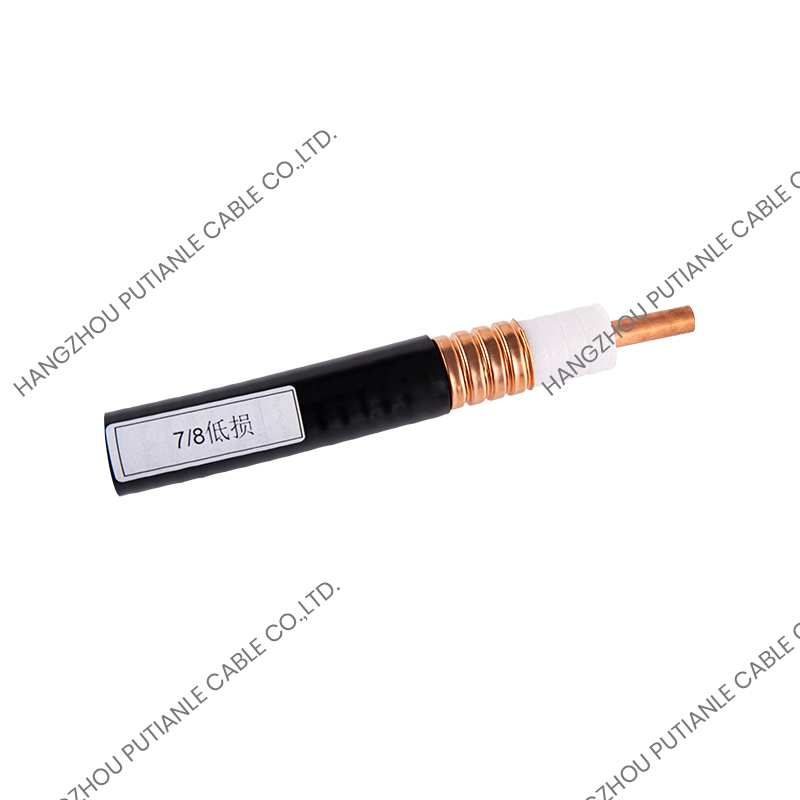
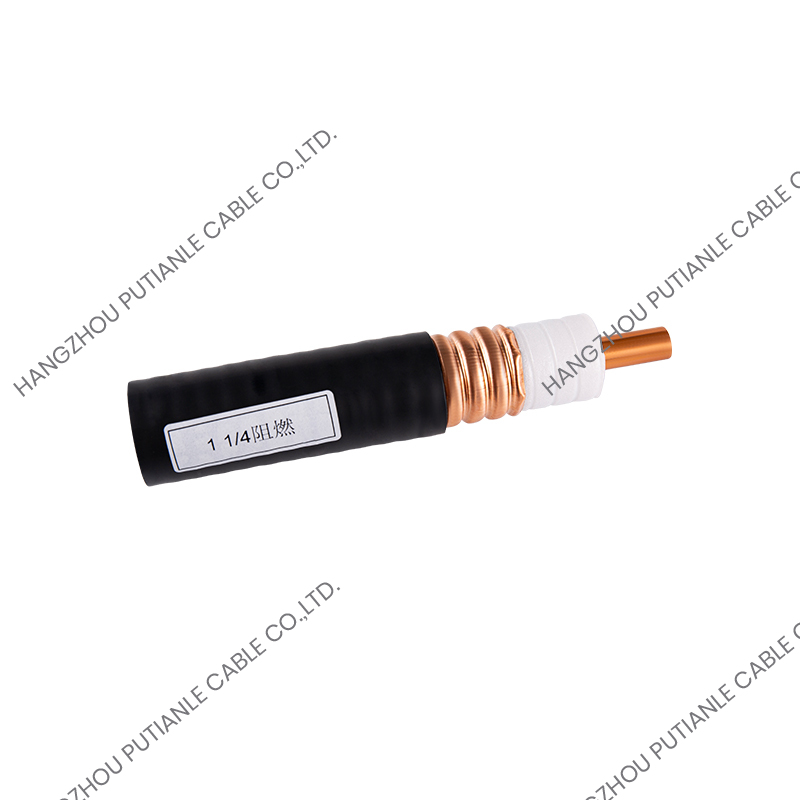
| Corrugated copper tube | 100% solid, no apertures | Lowest | Low | High-power RF feeders and long permanent runs |
Braid has a fundamental weakness at high frequencies: the woven strands are electromagnetically transparent in the gaps between them. The optical coverage percentage, while useful, overstates the shielding effect. A braid-only shield on a 900 MHz or 2.4 GHz path can couple far more interference than the same braid at 100 MHz. Adding a foil layer closes most of those gaps because the foil is continuous. Better still, a solid tube, corrugated aluminum or copper, has no gaps at all, and its transfer impedance stays low across a very wide frequency range.
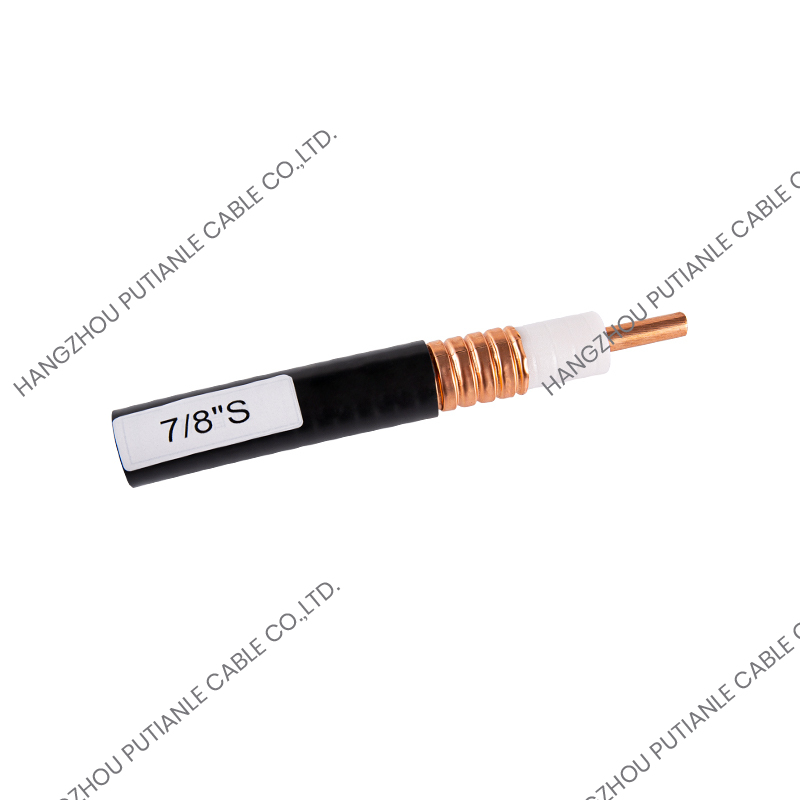
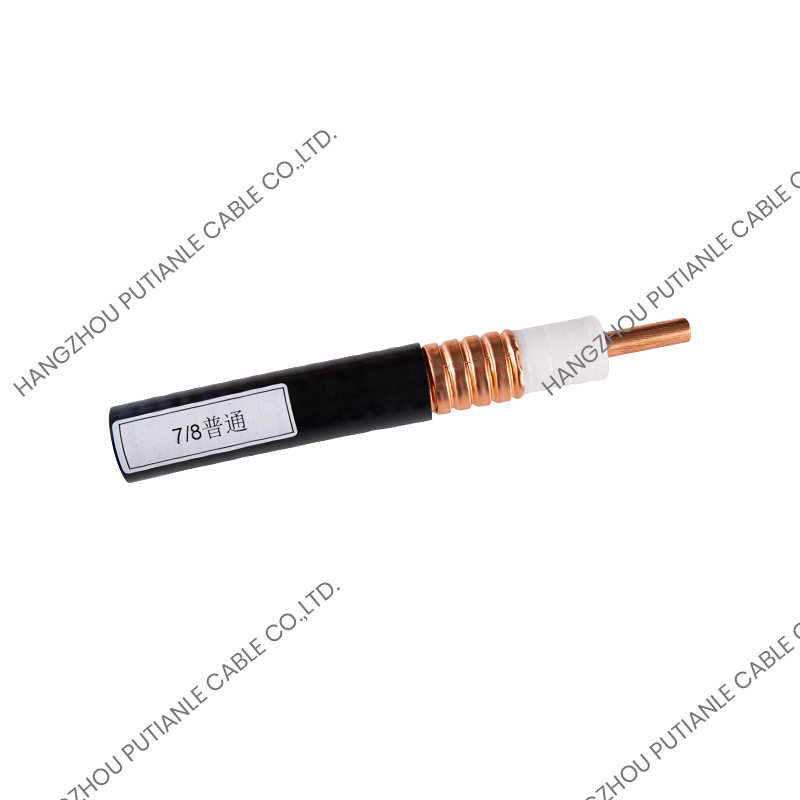
That is why high-performance RF feeders use corrugated tubes rather than braid. The trade-off is flexibility: a tube cable bends less easily and has a larger minimum bend radius. For a permanent feeder in a noisy environment, a 7/8 low-loss corrugated aluminum tube coaxial cable combines low attenuation with a solid outer conductor, which makes it a frequent choice for antenna downlinks and transmitter-to-antenna runs.
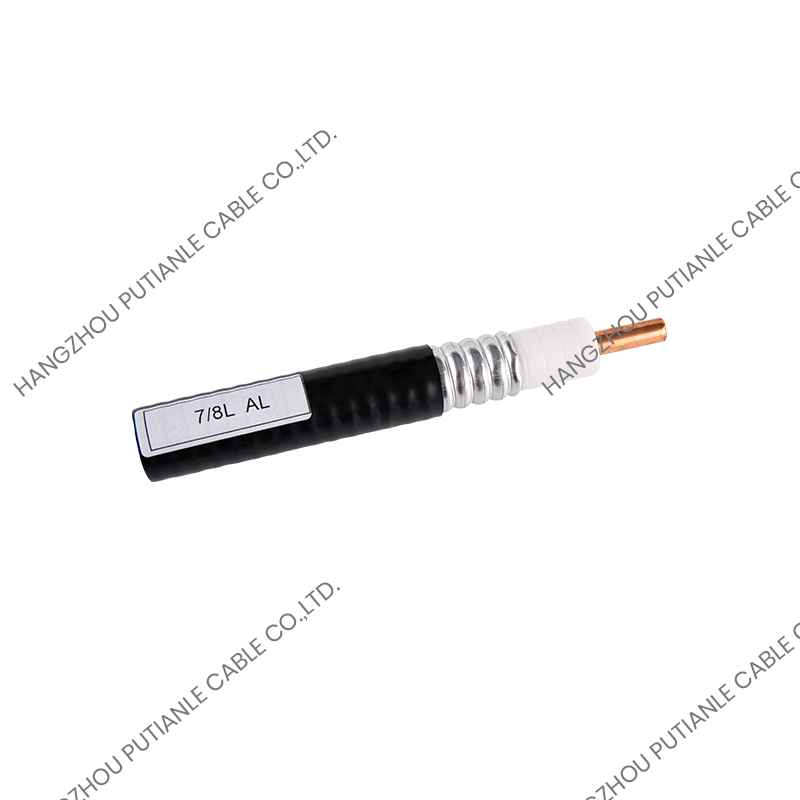 7/8" Low Loss Corrugated Aluminum Tube 50 Ohm Coaxial Cable Manufacturers, CustoHangzhou Putianle Cable Co., Ltd. is China Custom 7/8 inch Low Loss Corrugated Aluminum Tube 50 Ohm Coaxial Cable Manufacturers,Company,T...View Product →
Grounding and Installation Mistakes That Create Interference
Even a perfect shield will not protect a system that is grounded incorrectly. The most common grounding fault in coaxial installations is the ground loop. When the shield is connected to earth at both ends of a long run, and the two earth points have different potentials, a current flows along the shield. Because the shield has resistance, a small voltage appears across it, and that voltage is seen by the receiving circuit as interference.
The classic symptom in video systems is a horizontal bar that drifts vertically through the image. In data systems, it appears as an elevated bit error rate on the link.
Correct practice depends on the system type. For a receive-only video link, ground the shield at the receiver end only, and isolate the far end. For antenna feeders with lightning exposure, install a lightning protector where the cable enters the building and bond that protector to the building's grounding electrode system with a short, straight conductor. Do not use the cable shield itself as the ground path from the antenna to the building entry.
Installation geometry is the second common factor. A coaxial cable pulled through the same cable tray as power conductors, or strapped alongside a motor supply cable, picks up whatever fields those conductors emit. Even a good braid-plus-foil shield can be overwhelmed when the source is only a few centimeters away.
Connector quality deserves specific attention because it is the most common intermittent cause. A compression connector that captures all braid strands evenly is far more reliable than a crimp connector applied with an inexpensive tool. The braid must be folded back uniformly over the ferrule, and the center conductor must not protrude beyond the contact face. In practice, a termination fault shows up as a periodic loss of signal that correlates with vibration or temperature change, not as a constant noise floor. Verify each termination with a sweep or return-loss measurement after installation.
The practical rules for cable routing are simple:
- Maintain at least 150 mm of separation between coaxial cables and power cables in parallel runs.
- Cross power cables at 90 degrees when a crossing is unavoidable.
- Never route coaxial cable inside the same conduit as mains wiring.
Choosing the Right Shield for an EMI-Prone Location
Once the installation practice is corrected, the cable construction becomes the deciding factor. The question is not whether the cable is shielded, because nearly all coaxial cable is shielded. The real question is which shield class is justified by the noise environment.
75-ohm systems: drops and trunks
For 75-ohm drops in homes, offices, and ordinary commercial buildings, a single-braid RG6 is usually adequate. When the drop runs near lift shafts, HVAC drives, or distribution panels, move up to a foil-plus-braid construction. An RG6 outer conductor braiding cable built for CCTV duty adds an extra layer of protection at modest cost, which is why it appears in many commercial surveillance specifications.
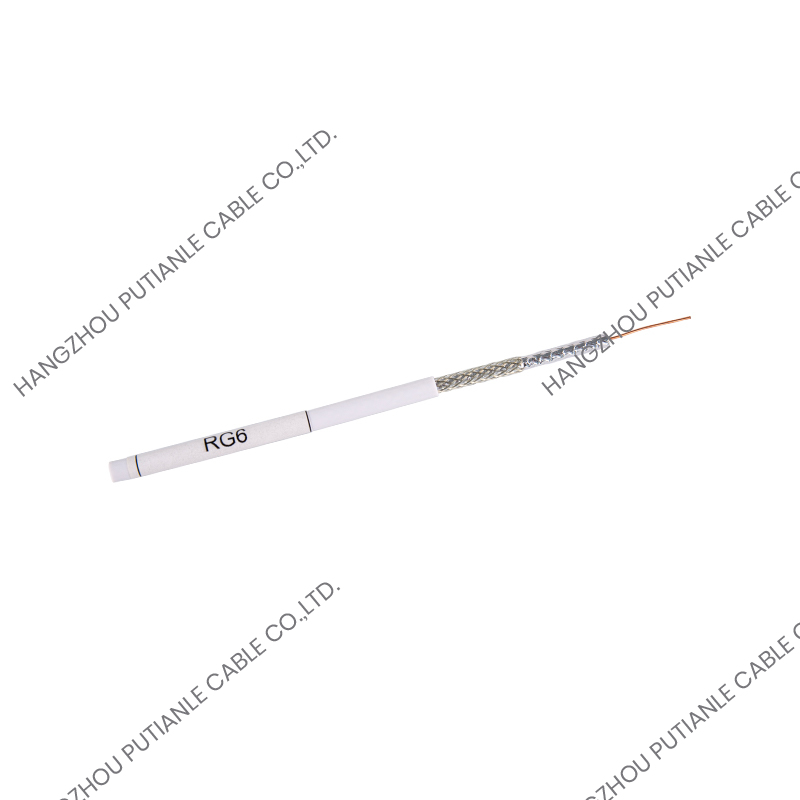 RG6 Simple Installation Outer Conductor 75 OHM Braiding Cable Manufacturers, CusHangzhou Putianle Cable Co., Ltd. is China Custom RG6 Simple Installation Outer Conductor 75 OHM Braiding Cable Manufacturers,Company,Int...View Product →
For the trunk or riser portion of a 75-ohm network, the run is longer and the noise stakes are higher. Here a solid aluminum tube construction is the better choice. A QR540 aluminum tube cable provides 100% shield coverage and low attenuation, making it suitable for headend-to-distribution links in cable television and surveillance systems.
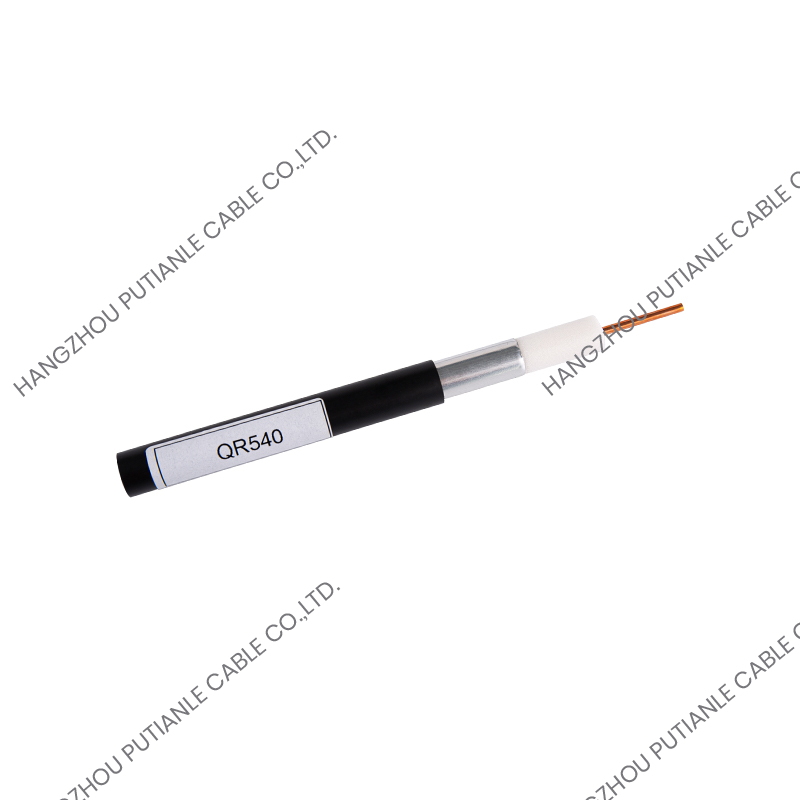 QR540 Wear Resistant 75 OHM Aluminum Tube Cable Manufacturers, Custom CompanyHangzhou Putianle Cable Co., Ltd. is China Custom QR540 Wear Resistant 75 OHM Aluminum Tube Cable Manufacturers,Company,Unveil the QR540 ...View Product →
50-ohm RF feeders
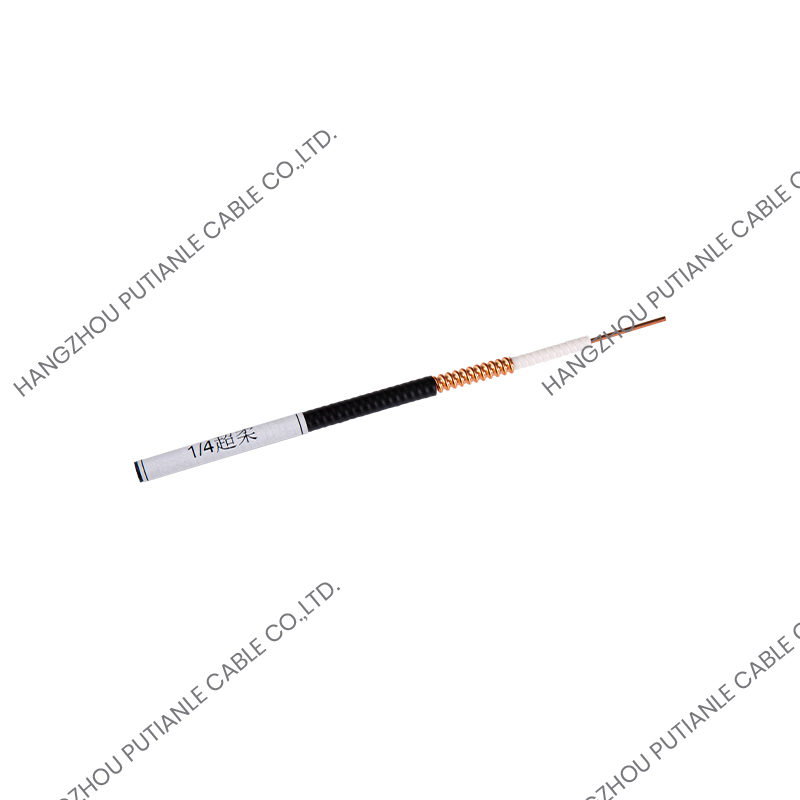
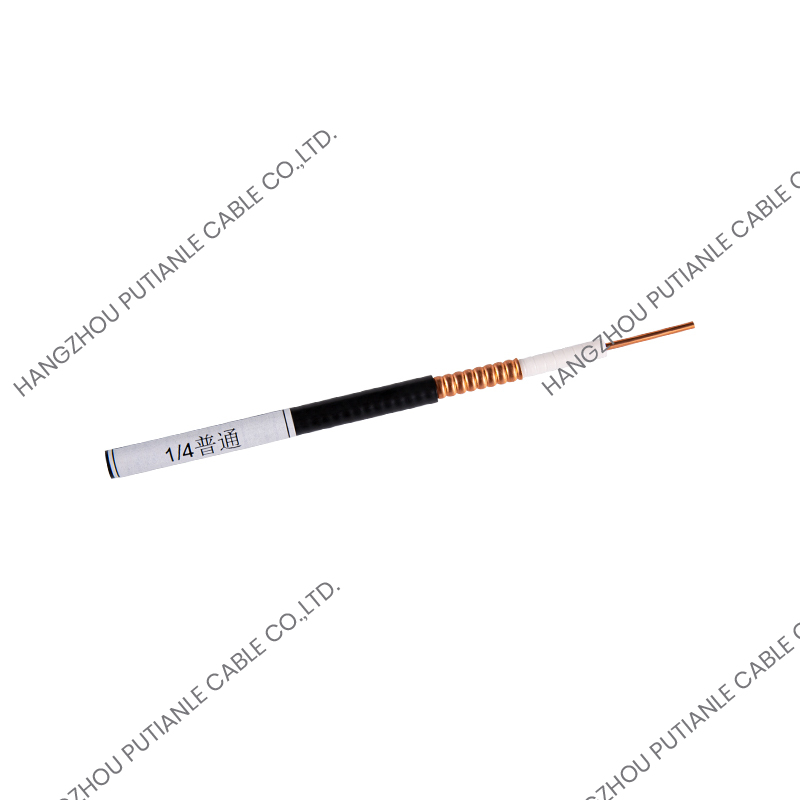
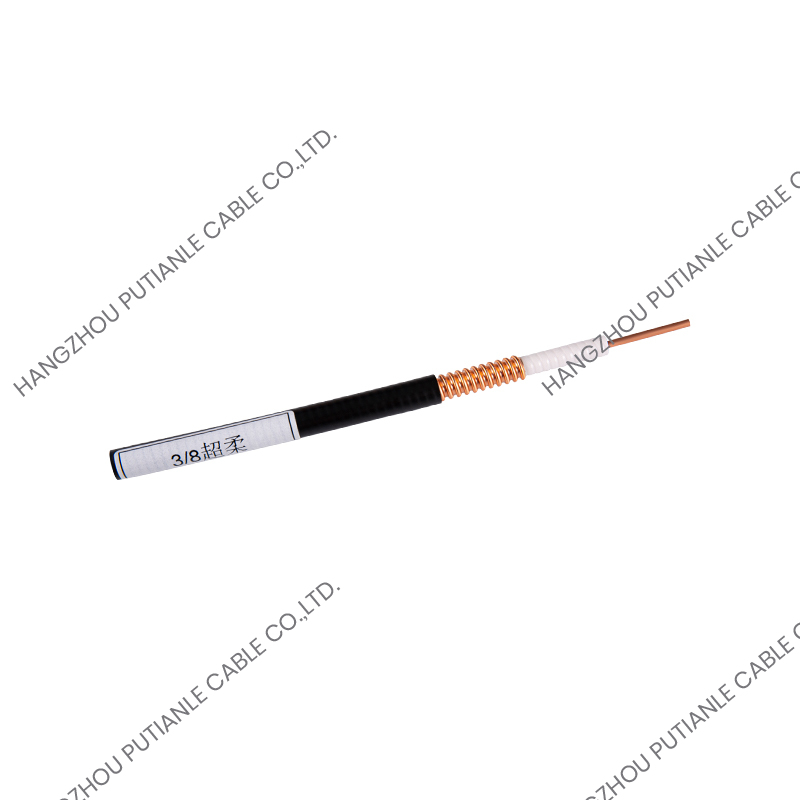
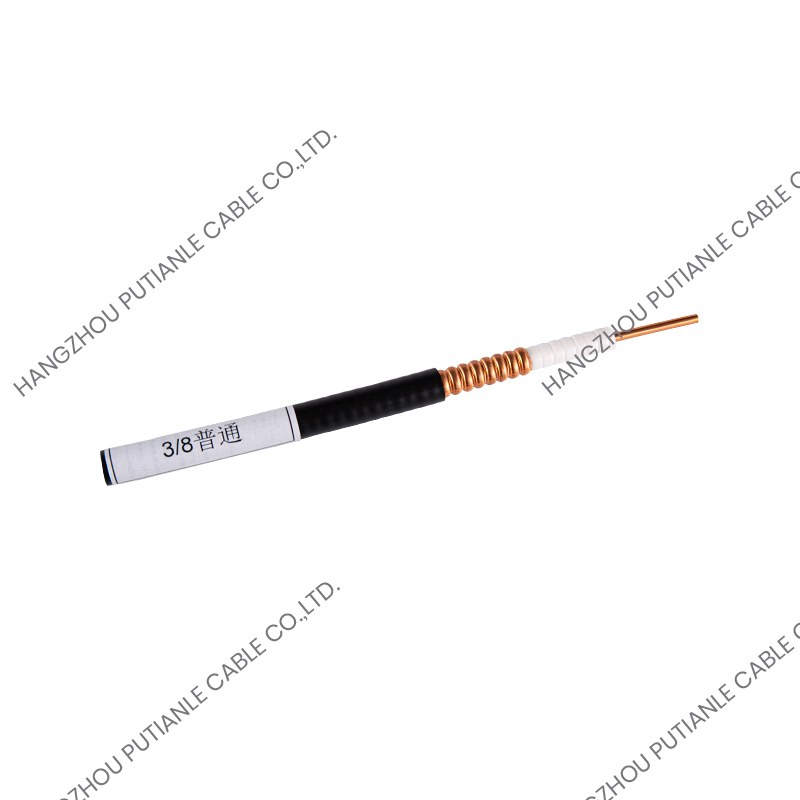
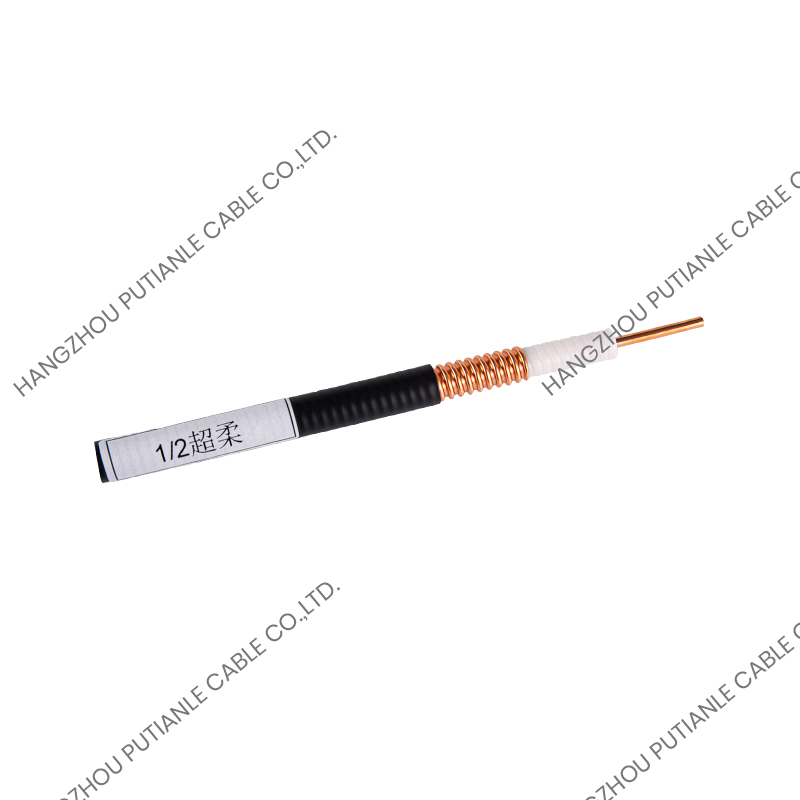
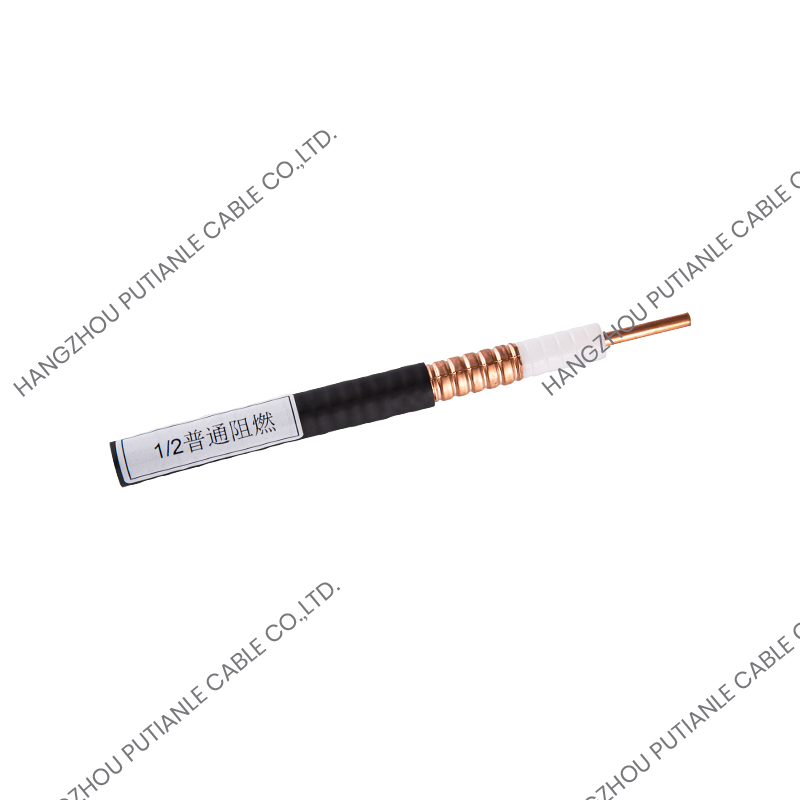
For 50-ohm RF feeders, the decision follows the same logic. Short, flexible jumpers between the radio and the permanent feeder can use braided construction, but the permanent run, especially outdoors or in a machine environment, belongs to a corrugated tube cable. The full coaxial cable product portfolio covers both ends of that range, from super-flexible braided cables to annular corrugated copper and aluminum tubes.
Coaxial cable does not have to fear electromagnetic interference; it is built to reject it. The failures seen in the field trace back to a damaged shield, a grounding loop, or a shield class that was too light for the environment. Check those three points in order, and most interference problems turn out to be installation problems that are solved before the cable is replaced. When the environment truly demands it, a solid-tube cable removes the remaining doubt.