中文简体
中文简体 English
 Español
Content
A CCTV integrator was asked to deliver clean video over a 500-foot run inside a warehouse. The choice was twisted pair, fiber, or coaxial cable. Coax won because it was within range, matched the DVR inputs, and could be terminated on site without special tools. That scenario sums up what coaxial cable is used for: carrying a radio-frequency signal from one point to another while keeping external noise and attenuation under control. The same logic applies in cable TV distribution, wireless antenna feeds, and broadband internet access. When someone asks what coaxial cable is used for, the answer depends on which side of the RF chain they are working in, and the two rules that matter are impedance matching and shielding quality.
The Core Uses of Coaxial Cable
Coaxial cable is used for any system that requires an RF signal to travel between a source and a receiver. The most common ones are cable television, CCTV video transmission, broadband internet, satellite and antenna feeds, and wireless base station connections. The keyword here is RF. From 5 MHz to 1 GHz and beyond, coaxial cable covers the bandwidth needed for video, data, and voice with predictable loss. Fiber optic cable carries light and has a much higher bandwidth ceiling, but coax is still a practical choice when the distance is under a few thousand feet and the connectors already match the devices.
Cable Television and Video Distribution
Cable television and community antenna TV systems have relied on coaxial cable since the 1950s. In a headend, programming is combined and sent out on a trunk cable. The main choice for this application is 75-ohm impedance. RG6 and QR-series aluminum tube cables dominate because they maintain a flat frequency response at the frequencies assigned to CATV channels.
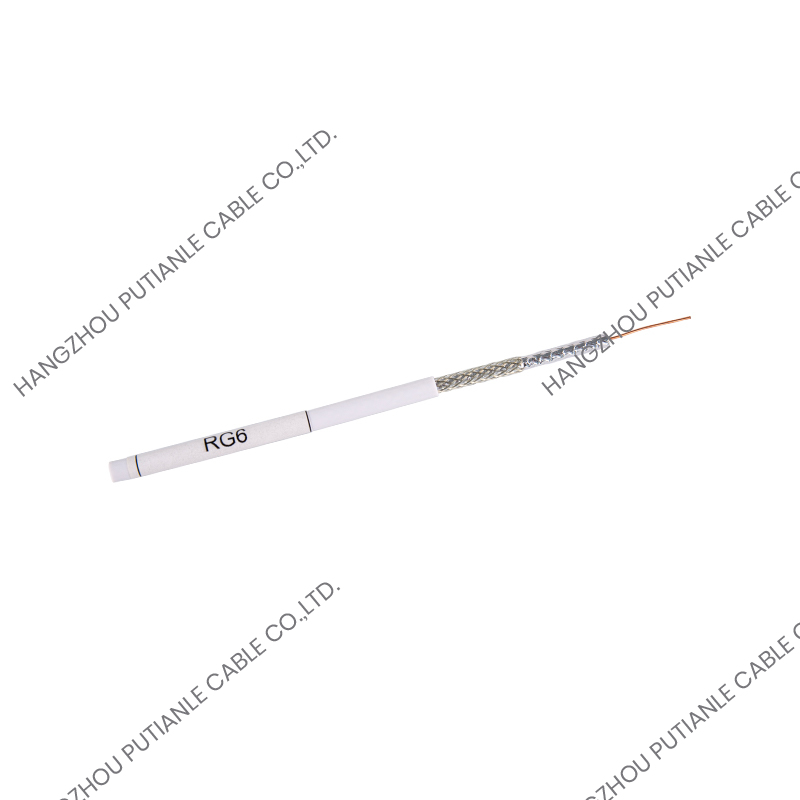 Standard 75 Ohm Braiding Cable for CATV and CCTVThis RG6 cable suits residential drop connections from a tap to a set-top box, providing reliable signal transmission with durable jacket and copper conductor.View Product →
An RG6 drop cable from a tap to a set-top box is usually enough for a single residence. For longer trunk runs between hubs, a QR-series aluminum tube cable offers lower attenuation and better shielding, especially in the 300 MHz to 900 MHz range where many channels are carried in a modern digital lineup.
CCTV and Security Camera Systems
CCTV and security camera systems are perhaps the most common reason a buyer searches for what coaxial cable is used for. Analog and HD-over-coax cameras send video from a camera back to a recorder. The signal is baseband video on a 75-ohm line. RG59 and RG6 are the two most common sizes. RG59 is thinner and easier to pull in bundles, but RG6 has lower loss and is better for runs over 100 feet or for 4K cameras that require more bandwidth. For a multi-camera project on a production floor or in a parking garage, choosing the right gauge at the beginning prevents the need for a video balun or an amplifier later.
Broadband Internet and Data Transmission
Cable internet providers still use coax in the access network. A DOCSIS modem connects to a coaxial drop because the cable plant was built over decades. The same cable that carries television channels also carries downstream and upstream data. Coaxial cable is not obsolete in this environment because it offers bandwidth up to 1 GHz or more with shielded and bonded construction, which protects the data path from noise. In a fiber-to-the-home architecture, the drop may be fiber, but the in-building wiring in many multi-dwelling units is still coax.
Wireless Communication and RF Signal Feeds
Cell sites, broadcast radio, and wireless device networks need a 50-ohm cable to connect a radio unit to an antenna. This is a different world from CATV because the impedance matches typical RF systems. A 50-ohm braided cable like PTL500 is used for short jumpers and equipment racks. For longer feeder runs, corrugated aluminum or copper tube cables are used because they handle higher power and have lower loss. The choice between braided and corrugated cable comes down to bending requirements and signal budget.
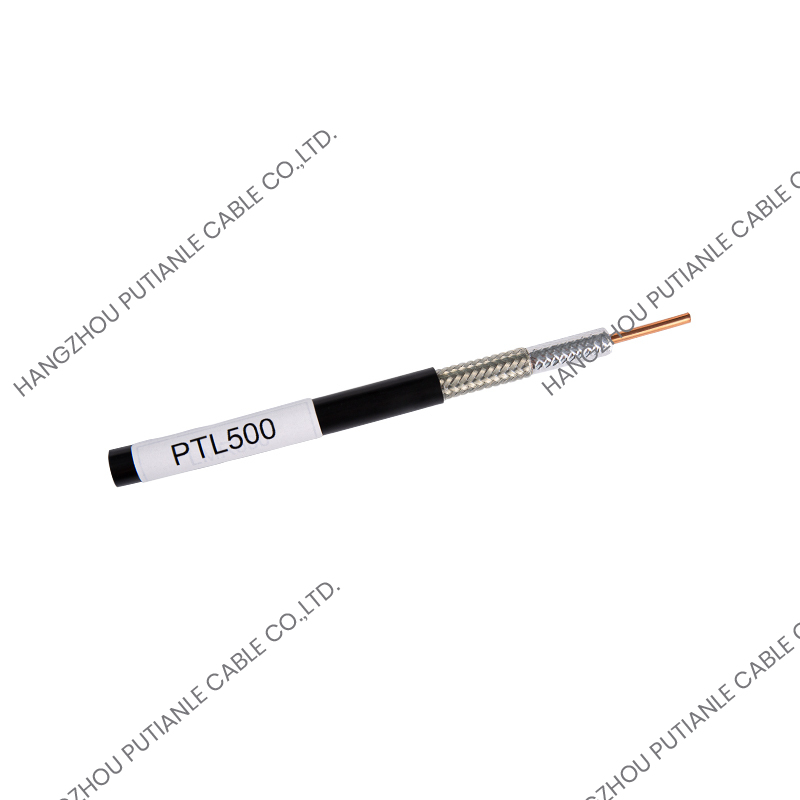 PTL500 50 Ohm Braiding Cable for RF EquipmentDesigned for short jumpers and equipment racks in wireless networks, this cable offers low attenuation and shielding for high-speed data and video.View Product →
Signal Coverage with Leakage Cable
Leakage cable is a special form of coax that radiates signal along its length. It is used in tunnels, mines, and inside large buildings where antennas cannot provide even coverage. The cable is designed as a radiating feeder so that signals leak in and out along a continuous path, allowing mobile devices to maintain a link while the user moves through a confined area.
Choosing the Right Coaxial Cable: Key Specifications
The first question in a coaxial cable spec is impedance: 50 ohm or 75 ohm. 50-ohm cable is for RF feeds, antennas, and wireless systems. 75-ohm cable is for video and cable television. A mismatch between the system impedance and the cable impedance causes signal reflections, image ghosting, and lost power.
| Specification | 50-ohm Cable | 75-ohm Cable |
|---|---|---|
| Typical applications | RF feeds, wireless, antenna | CATV, CCTV, video |
| Common series | PTL, D-FB, corrugated | RG6, RG59, QR |
| Frequency range | Up to 6 GHz depending on structure | Up to 1 GHz for CATV |
| Attenuation | Higher at low frequencies | Lower at low frequencies |
| Outer conductor | Braid, corrugated aluminum or copper | Braid, aluminum tube |
Attenuation is the second number to check. It is expressed in dB per 100 feet or per 100 meters at a given frequency. A cable with lower attenuation delivers a stronger signal at the receiver, which reduces the need for an amplifier. For short runs, the difference may not matter, but for a 500-foot run to a camera or an antenna, choosing a cable with 1 dB less loss per 100 feet can be the difference between a stable picture and a marginal one.
Shielding structure matters in a noisy environment. A single braided shield with 90% coverage handles a clean indoor run. A dual shield or a cable with a foil outer conductor plus braid protects better against interference from power lines, motors, and radio transmitters located nearby. In a busy industrial site, checking the shielding coverage and the jacket thickness is a practical step because the cost of troubleshooting a noisy video line is much higher than the cost of upgrading the shield.
For a systematic view of how coaxial cables are divided by construction and impedance, this guide on the different types of coaxial cables explains the classification used across the industry.
Buying Considerations and Common Pitfalls
When buying coaxial cable for a specific project, the procurement decision is not just about price per foot. Four variables control the final performance: impedance, attenuation, shielding structure, and jacket rating.
An impedance mismatch is the most common source of a bad image. If a 50-ohm cable is inserted into a 75-ohm video pathway, the signal reflects at the junction and creates ghosting on the display. The fix is straightforward: use the impedance that matches the equipment ports.
Jacket rating is another decision that surfaces during installation. A PVC jacket is suitable for indoor runs where the cable is protected by a conduit or a wall cavity. A polyethylene jacket is used outdoors because it resists moisture and UV. In air handling spaces, the code sometimes requires a plenum-rated jacket that releases less smoke under fire conditions.
Connector compatibility is the last checkpoint before the project goes live. F-type connectors are standard for CATV and CCTV. N-type and 7/16 DIN connectors are common for RF and wireless. Ordering a connector that does not match the equipment ports creates delays and extra cost, especially when the cable is already pulled or the connector is a custom assembly.
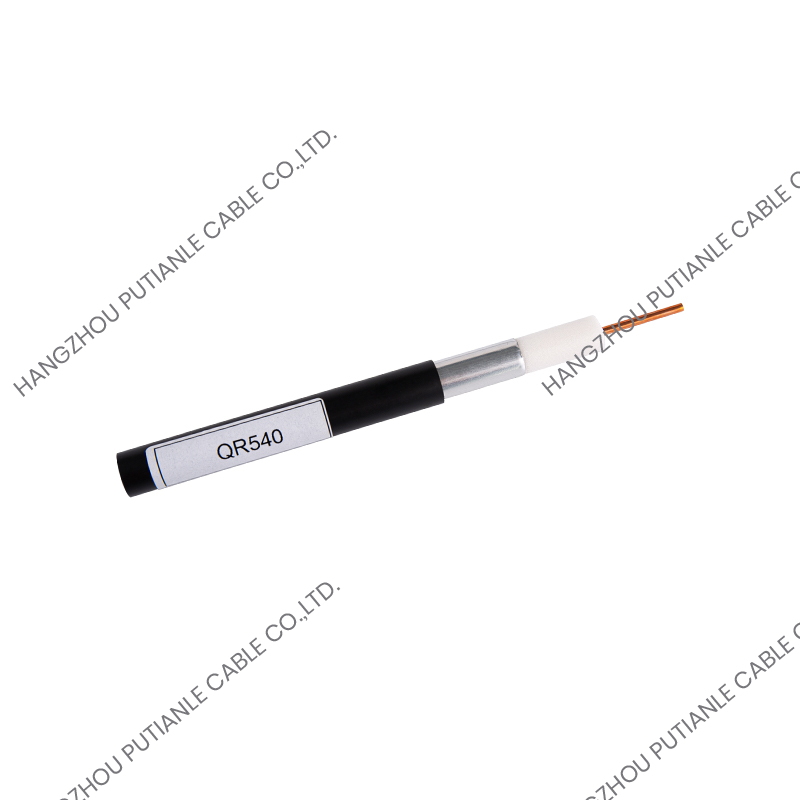 QR540 Aluminum Tube Cable for CATV Trunk LineConstructed with an aluminum tube for low attenuation and shielding, this cable is ideal for longer CATV trunk runs carrying many channels.View Product →
For CATV distribution systems that carry many channels over longer distances, a QR-series aluminum tube cable provides the lower attenuation and better shielding that a trunk line requires. The investment in a better cable is usually repaid in fewer field repairs and longer system reach. From a procurement perspective, a cable purchase should include the connectors, a sample for testing, and the manufacturer's attenuation data.