中文简体
中文简体 English
 Español
Content
- 1 What Is a 75 Ohm RG Series Braiding Cable?
- 2 Construction Layers of a 75 Ohm RG Braiding Cable
- 3 Key 75 Ohm RG Cable Types and Their Specifications
- 4 Braid Coverage and Shielding Effectiveness Explained
- 5 Signal Attenuation and Maximum Run Length Guidelines
- 6 Common Applications of 75 Ohm RG Braiding Cables
- 7 How to Select the Right 75 Ohm RG Braiding Cable for Your Project
What Is a 75 Ohm RG Series Braiding Cable?
A 75 ohm RG series braiding cable is a type of coaxial cable engineered to maintain a characteristic impedance of 75 ohms throughout its length, with a braided metallic shield as its primary or supplementary shielding layer. The "RG" designation originates from the U.S. military specification system — standing for "Radio Guide" — and has been adopted globally as a shorthand for coaxial cable type designations. The 75 ohm impedance value is specifically optimized for video signal transmission, making this cable family the standard in broadcast television, cable television (CATV), satellite distribution, closed-circuit television (CCTV), and consumer home theater systems.
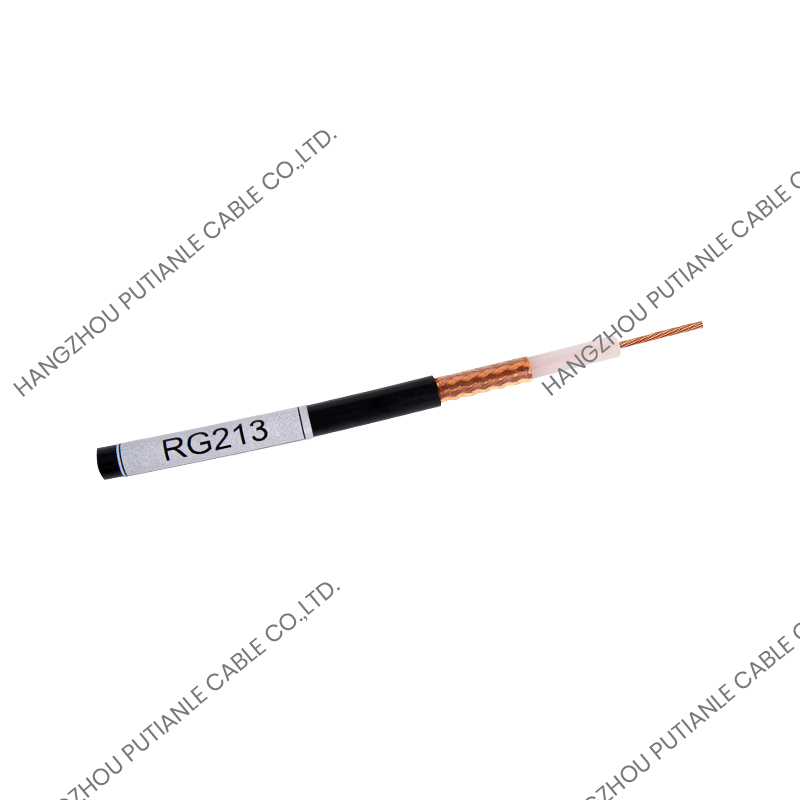
The braided shield in RG series cables consists of fine copper or tinned copper wires woven in a regular interlocking pattern around the dielectric insulator. This braid serves a dual function: it provides the return current path for the transmitted signal and acts as an electromagnetic shield that prevents external interference from entering the cable and contains the cable's own signal radiation. The coverage percentage of the braid — typically ranging from 85% to 98% — is one of the most critical specifications determining the cable's shielding effectiveness and overall signal integrity performance.
Construction Layers of a 75 Ohm RG Braiding Cable
Understanding the construction of a 75 ohm RG coaxial cable clarifies why each layer matters for signal performance, durability, and application suitability. Every layer is engineered to contribute to the cable's overall electrical and mechanical characteristics.
- Center Conductor: The innermost element carries the signal. In 75 ohm RG cables, this is typically a solid or stranded copper wire, though copper-clad steel (CCS) is used in some cost-optimized designs. Solid conductors offer lower DC resistance and better high-frequency performance, while stranded conductors improve flexibility for installation in tight bends or mobile applications.
- Dielectric Insulator: Surrounding the center conductor, the dielectric determines the cable's impedance, signal velocity, and attenuation characteristics. Solid polyethylene (PE) is the traditional dielectric, offering excellent electrical stability. Foamed or cellular PE reduces the dielectric constant, which lowers signal attenuation and increases velocity of propagation — beneficial in long cable runs.
- Foil Shield (where present): Many modern RG cables include an aluminum or bonded foil layer directly over the dielectric before the braid. This foil provides near 100% coverage for high-frequency interference suppression, particularly against ingress from LTE, cellular, and Wi-Fi signals that standard braid alone may not fully block.
- Braided Shield: The woven metallic braid layer is the defining construction feature of braiding cable. Its coverage percentage, wire gauge, and material (bare copper, tinned copper, or silver-plated copper) directly affect shielding effectiveness, current-carrying capacity of the return path, and termination ease with standard connectors.
- Outer Jacket: The protective PVC, polyethylene, or low-smoke zero-halogen (LSZH) jacket shields the cable from physical damage, moisture, UV radiation, and chemical exposure. Jacket material selection is driven by installation environment — indoor, outdoor, direct burial, plenum-rated, or hazardous area.
Key 75 Ohm RG Cable Types and Their Specifications
Several RG designations within the 75 ohm family serve different applications based on their size, attenuation characteristics, and construction. The following table summarizes the most widely used types in professional and consumer installations.
| Cable Type | Outer Diameter | Attenuation at 100MHz | Typical Application |
| RG-6 | 6.86mm | ~5.9 dB/100m | CATV, satellite TV, antenna feeds |
| RG-11 | 10.3mm | ~3.0 dB/100m | Long-run trunk lines, underground CATV |
| RG-59 | 6.15mm | ~7.6 dB/100m | CCTV, analog video, short runs |
| RG-179 | 2.54mm | ~28 dB/100m | Miniature video, medical, aerospace |
| RG-216 | 10.8mm | ~2.8 dB/100m | Broadcast, high-power distribution |
RG-6 is the dominant choice for residential and commercial CATV and satellite installations due to its balance of low attenuation, manageable size, and cost-efficiency. RG-11 is reserved for long trunk runs where signal loss over distance must be minimized — typically in underground feeder lines between distribution amplifiers and building entry points. RG-59, while older and higher in attenuation than RG-6, remains widely installed in legacy CCTV systems and is still specified for short analog video runs where its smaller diameter and greater flexibility are advantageous.
Braid Coverage and Shielding Effectiveness Explained
The braid coverage percentage is perhaps the most misunderstood and underspecified parameter when sourcing 75 ohm RG braiding cables. It directly determines how effectively the cable suppresses electromagnetic interference (EMI) ingress and egress — a critical concern in environments with dense wireless signals, power line interference, or co-located RF equipment.
Single Braid vs. Double Braid Construction
Standard RG-6 and RG-59 cables are commonly available in single braid, dual shield (foil plus braid), and quad shield (double foil plus double braid) constructions. Single braid cables with 85–90% coverage are adequate for basic residential antenna or CATV connections in low-interference environments. Dual shield cables add a bonded aluminum foil beneath the braid to achieve near-100% theoretical coverage at high frequencies, significantly improving rejection of cellular, Wi-Fi, and LTE interference — critical in modern dense-signal urban installations. Quad shield cables are specified in the most demanding environments, such as near high-power broadcast transmitters, industrial facilities, or wherever the cable must pass through areas with intense EMI sources.
Braid Material: Bare Copper vs. Tinned Copper
Bare copper braid offers the lowest electrical resistance and best conductivity, making it ideal for applications where signal return path efficiency and low attenuation are paramount. Tinned copper braid — copper wires coated with a thin layer of tin — provides significantly improved corrosion resistance, making it the preferred choice for outdoor, direct burial, or high-humidity installations where bare copper would oxidize and degrade over time. The tin coating introduces a marginal increase in resistance but provides a substantial improvement in long-term reliability that outweighs the electrical trade-off in most field installation scenarios.
Signal Attenuation and Maximum Run Length Guidelines
Attenuation — the loss of signal power over the cable length — increases with both cable length and signal frequency. For 75 ohm RG series cables carrying video or RF signals, managing attenuation within acceptable limits is fundamental to system design. Signal levels that fall too low result in pixelation, dropouts, noise, or complete signal loss at the receiving end.
As a practical reference, RG-6 quad shield cable exhibits approximately 5.9 dB of attenuation per 100 meters at 100 MHz, rising to approximately 11.5 dB per 100 meters at 400 MHz, and approaching 17 dB per 100 meters at 900 MHz. For satellite IF signals operating between 950 MHz and 2150 MHz, signal loss per 100 meters can reach 25–35 dB depending on cable quality and frequency. These figures underscore why satellite and high-frequency CATV installations require careful run length planning, with distribution amplifiers or signal boosters inserted at calculated intervals to maintain signal levels within the receiver's operational range.
For HD-SDI broadcast video systems operating at 1.485 Gbps or 2.97 Gbps, even RG-6 runs must be kept short — typically under 100 meters for 1080p signals — or replaced with specialized low-loss broadcast coaxial cables meeting SMPTE standards to maintain adequate eye pattern performance at the destination equipment.
Common Applications of 75 Ohm RG Braiding Cables
The 75 ohm impedance standard has been adopted across a wide range of video and RF distribution systems. Each application places specific demands on cable type, shielding, jacket material, and connector compatibility.
- CATV and cable television distribution: RG-6 and RG-11 are the backbone of subscriber cable TV networks, carrying multiplexed RF signals from 5 MHz to 1 GHz or beyond across trunk lines, feeder cables, and drop connections to individual premises.
- Satellite television: RG-6 quad shield is the standard for connecting satellite dishes to receivers, handling the 950–2150 MHz IF signal range from the LNB and the 22 kHz DiSEqC switching tones used to control multi-switch systems and motor-driven dish positioners.
- CCTV and IP surveillance: RG-59 remains widely used for analog CCTV camera connections, while HD-TVI, HD-CVI, and AHD high-definition analog systems continue to use 75 ohm coaxial — primarily RG-59 and RG-6 — as the transmission medium for megapixel video signals over existing infrastructure.
- Broadcast and production facilities: Studio-grade 75 ohm coaxial cables meeting SMPTE 259M, 292M, and 424M standards are used for SD-SDI, HD-SDI, and 3G-SDI digital video signal routing between cameras, switchers, monitors, and recording systems in television production environments.
- Terrestrial antenna systems: RG-6 and RG-11 connect rooftop and attic TV antennas to distribution systems and individual receivers, handling UHF and VHF broadcast signals in the 54–806 MHz range used for over-the-air HDTV reception.
- Measurement and test equipment: RG-179 and other miniature 75 ohm coaxial cables are used in test and measurement instrumentation, medical imaging equipment, and aerospace systems where small cable diameter and precise impedance control are required in confined spaces.
How to Select the Right 75 Ohm RG Braiding Cable for Your Project
Choosing the correct 75 ohm RG braiding cable involves evaluating several interdependent factors. Making the wrong selection leads to signal degradation, premature cable failure, or incompatibility with connectors and passive components in the system.
Match Cable Type to Signal Frequency Range
Always select a cable rated for the highest frequency your system will carry. For satellite systems operating at 2.15 GHz or beyond (including Ka-band and wideband LNB outputs), specify cables with verified low attenuation at those frequencies — not just at 100 MHz or 400 MHz. Request attenuation sweep data from suppliers covering the full frequency range of your application before committing to a cable specification.
Consider Installation Environment for Jacket and Braid Selection
Outdoor and direct burial installations require UV-stabilized polyethylene jackets and tinned copper or aluminum braid to resist moisture ingress and oxidation. Indoor plenum installations in commercial buildings demand cables with plenum-rated jackets (FEP or LSZH) that meet fire safety codes such as UL CL2P or NEC Article 820. Flexible patch cable applications benefit from stranded center conductors and highly flexible jacket compounds that resist fatigue cracking from repeated bending.
Verify Connector Compatibility Before Ordering
Different RG cable outer diameters require specific connector compression or crimp tooling and connector body dimensions. RG-6 and RG-59 use the same F-connector thread but require different compression connectors due to their different jacket and dielectric diameters. Mixing connector types and cable sizes results in poor impedance matching at termination points, causing signal reflections that degrade performance — a particularly critical concern in wideband CATV and satellite systems where return loss specifications are tightly defined by network operators.