中文简体
 English
 Español

Content
- 1 What makes a cable fire resistant?
- 2 Fire resistant versus flame retardant: the difference that matters
- 3 How a fire resistant cable is built
- 4 Standards and tests worth knowing
- 5 Where fire resistant cables earn their keep
- 6 Choosing the right cable for a project
- 7 Where coaxial, fiber and leakage cables fit
- 8 Three misunderstandings we still run into
- 9 A last word
Fire is rarely the first thing on anyone's mind when a cable is specified. Attenuation, cost, bend radius and delivery date usually come first. Then someone from the safety review asks a simple, uncomfortable question: what happens to this cable if there is a fire in the building? That is the point where fire resistant cables enter the conversation, and where a lot of vague specifications suddenly have to become precise.
What makes a cable fire resistant?
An ordinary PVC or polyethylene insulated cable starts to soften well before 150 °C. Once the insulation fails, the circuit is gone. A fire resistant cable is built to keep carrying power or a signal for a defined period while a fire burns around it, commonly 30, 60, 90 or 120 minutes.
It helps to be honest about what that means. These cables are not fireproof, and nobody should expect them to survive an unlimited fire. What they do is buy time: time for the alarm to sound, for the lifts to reach the ground floor, for a booster pump to keep running, for people to move through a corridor that still has lights.
That idea, circuit integrity, is the heart of the whole category. Three things make it possible: a barrier layer that turns into a ceramic char under intense heat, a conductor system that can take the temperature, and an outer sheath that limits flame spread while producing as little smoke as possible.
Fire resistant versus flame retardant: the difference that matters
These two terms get swapped constantly, and the results can be expensive. Flame retardant describes how a cable behaves as fire spreads along it. Fire resistant describes whether the cable keeps working. A cable can be flame retardant without being fire resistant, fire resistant without being especially low smoke, or both at once.
| Aspect | Flame retardant | Fire resistant |
|---|---|---|
| Primary purpose | Slow the spread of flame along the cable | Keep the circuit alive during a fire |
| Behaviour in fire | May still burn, but does not readily propagate | Continues to conduct for a rated period |
| Typical tests | IEC 60332-1-2, IEC 60332-3 | IEC 60331, EN 50200, BS 6387, DIN 4102-12 |
| Typical use | General building wiring, tray runs, panels | Alarm loops, emergency lighting, pumps, tunnels |
| Where it falls short | Circuit integrity is not part of the promise | Cost and stiffness; overspecifying wastes money |
If only one sentence sticks, let it be this one: flame retardant is about not helping the fire, fire resistant is about not giving up on the circuit.
How a fire resistant cable is built
From the outside in, most designs follow the same logic:
- Conductor. Annealed copper, sometimes nickel-plated or otherwise treated so it resists oxidation at high temperature.
- Fire barrier. Mica tape wrapped around the conductor, or a ceramic-forming silicone layer. Under heat it sinters into a brittle but insulating shell that keeps the conductor separated.
- Insulation. Cross-linked polyethylene, silicone or a mineral-filled compound chosen for thermal stability rather than pure electrical performance.
- Screen or armour. Where the application needs shielding or mechanical protection, a consideration that matters a great deal in coaxial and RF work.
- Outer sheath. Usually a low smoke zero halogen compound, so the cable's own combustion does not add corrosive gas or dense smoke to an already bad situation.
Every layer costs money and adds stiffness. That is why a good specification names the fire performance it actually needs instead of asking for the highest grade everywhere.
Standards and tests worth knowing
Fire testing is where marketing language tends to fall apart, so a few reference points help.
- IEC 60331 series — the classic circuit integrity test: cable is exposed to flame, and continuity is checked at rated times.
- IEC 60332-1-2 and 60332-3 — single wire and bunched flame propagation, the usual reference for flame retardant behaviour.
- IEC 60754 and IEC 61034 — acid gas evolution and smoke density, the pair behind most low smoke zero halogen claims.
- EN 50200 (PH 30 to PH 120) — fire with mechanical shock, widely referenced in European building services.
- BS 6387 CWZ — the letters cover fire alone, fire with water, and fire with mechanical shock.
- DIN 4102-12 — the E30 to E90 integrity classes familiar to anyone working on German-speaking projects.
Material selection often starts with the applicable IEC flammability rating, then narrows to the test the authority having jurisdiction actually accepts. Local codes differ, and a certificate that satisfies one market can be irrelevant in another.
Where fire resistant cables earn their keep
The pattern is consistent: anywhere a circuit has to work during the emergency it was installed for.
- Fire detection and alarm loops, and the sounders they trigger.
- Emergency lighting and escape route signage.
- Sprinkler and booster pumps, smoke extract fans and pressurisation systems.
- Lift homing circuits and refuge floor communications.
- Metro tunnels, road tunnels and underground car parks, where evacuation takes time.
- Hospitals, data halls and process plants, where a controlled shutdown depends on a few critical signals.
In road and rail tunnels, the cable route itself is often the difficulty. A radiating or leakage feeder runs the length of the tunnel to provide coverage where nothing else reaches, and it has to hold up long enough for emergency services to keep talking.
 1/2-Inch Compact Leakage Feeder Cable for Tunnel CoverageA compact leakage feeder for in-building wireless coverage and tunnel signal distribution where conventional antennas struggle, with flexible and discreet routing.View Product →
Choosing the right cable for a project
After more than twenty years of matching cables to sites, our own checklist looks roughly like this:
- Define the survival time the code or insurer requires, and write it into the specification.
- Confirm the test standard the inspector will accept, not just the one on the datasheet.
- Check the sheath requirement: low smoke zero halogen, or something simpler if the environment allows it.
- Match impedance and attenuation to the system; a fire rated cable that is electrically wrong is still the wrong cable.
- Allow for the physical reality: fire resistant designs are stiffer and have larger bend radii, so trays, pulls and terminations need planning.
- Ask what documentation ships with the delivery, because approvals get checked at handover, not at order.
Overspecifying has a cost too. Putting a 120-minute cable on a circuit with a 30-minute requirement adds weight, price and installation difficulty without adding safety.
Where coaxial, fiber and leakage cables fit
Most of what we build at Putianle sits in the RF and broadband world: 50 ohm and 75 ohm coaxial cables, fiber optic cable, leakage feeder, connectors and jumpers. Fire performance comes up in these families more often than people expect, especially on infrastructure work where the cable route passes through tunnels, risers and plant rooms.
Video is the obvious case. A 75 ohm RG6 run feeding a surveillance camera in a stairwell or plant room is part of the emergency picture, so the sheath and flame behaviour of that drop cable matter as much as its attenuation.
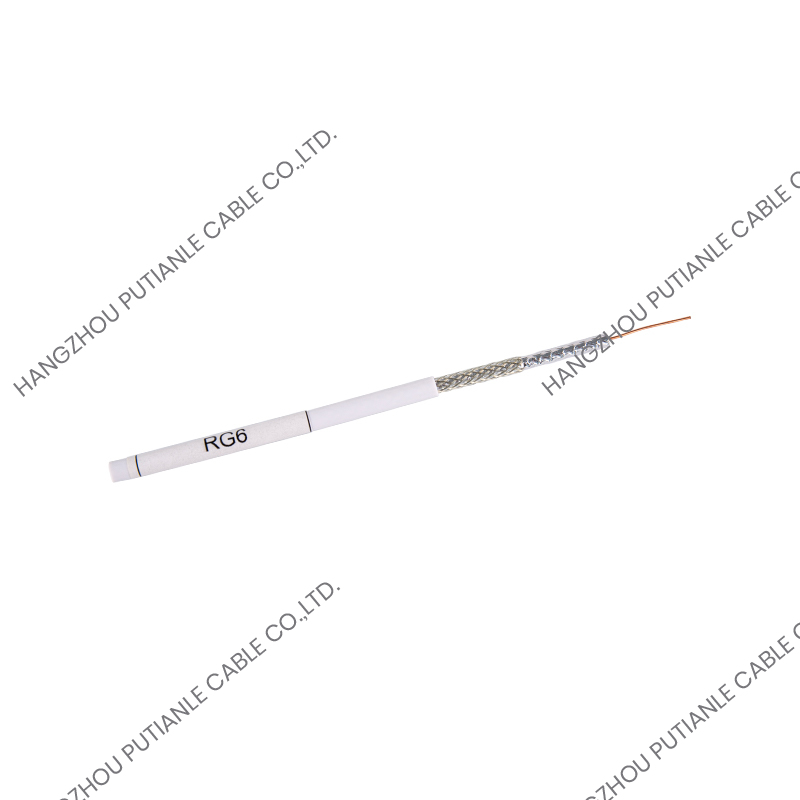 RG6 75 Ohm Braiding Coaxial Cable for SurveillanceA 75-ohm RG6 braiding coaxial cable for televisions and surveillance systems, suited to straightforward, dependable home or commercial signal runs.View Product →
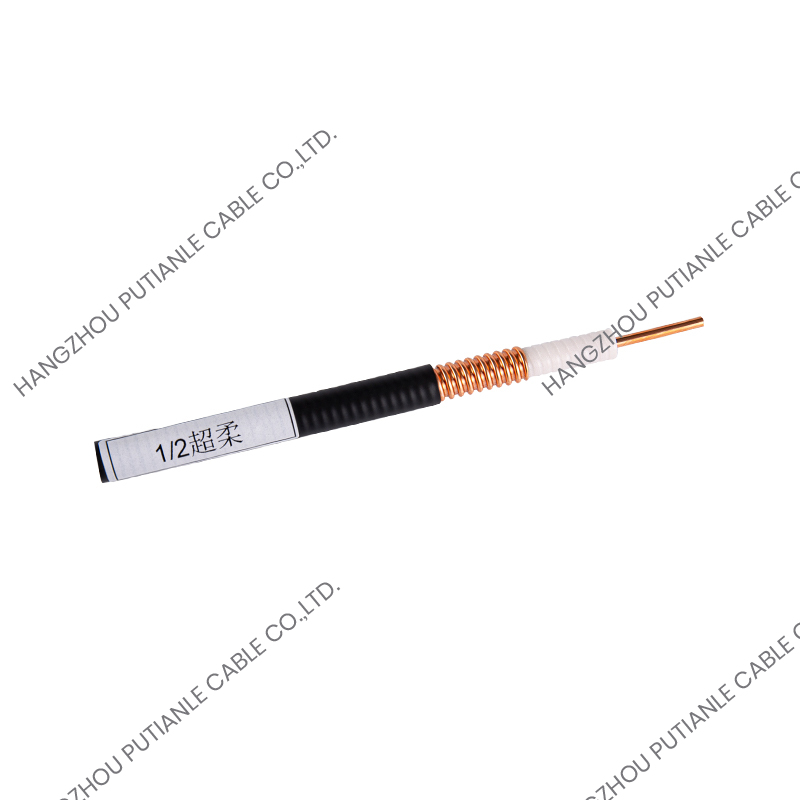
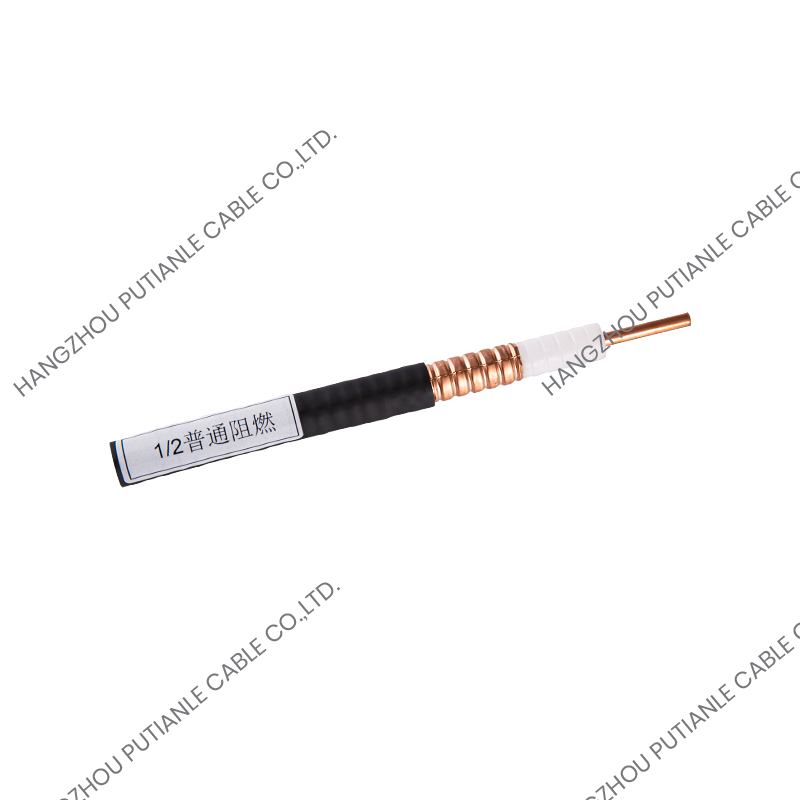
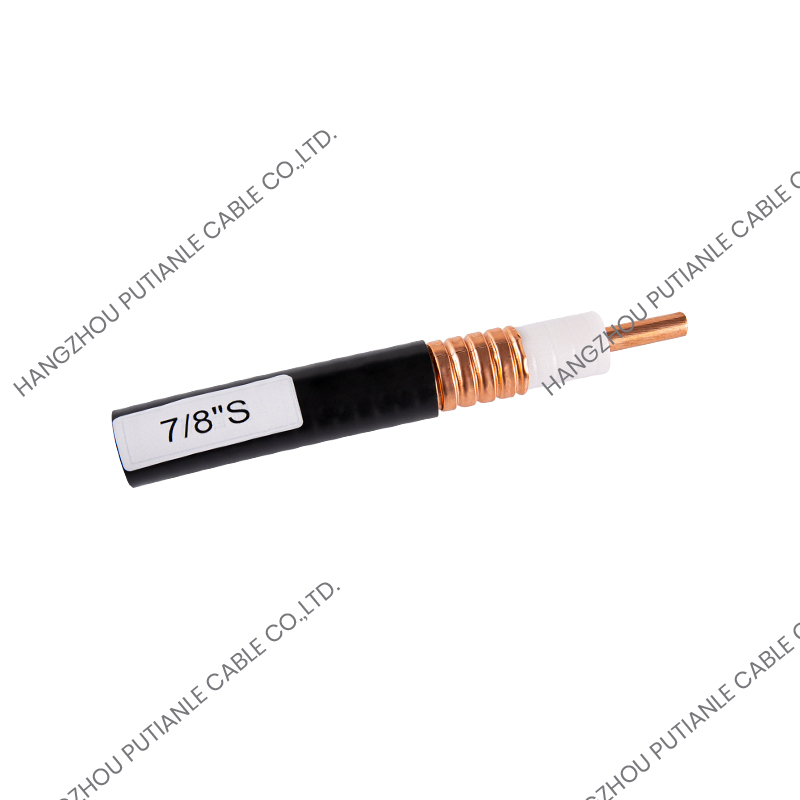
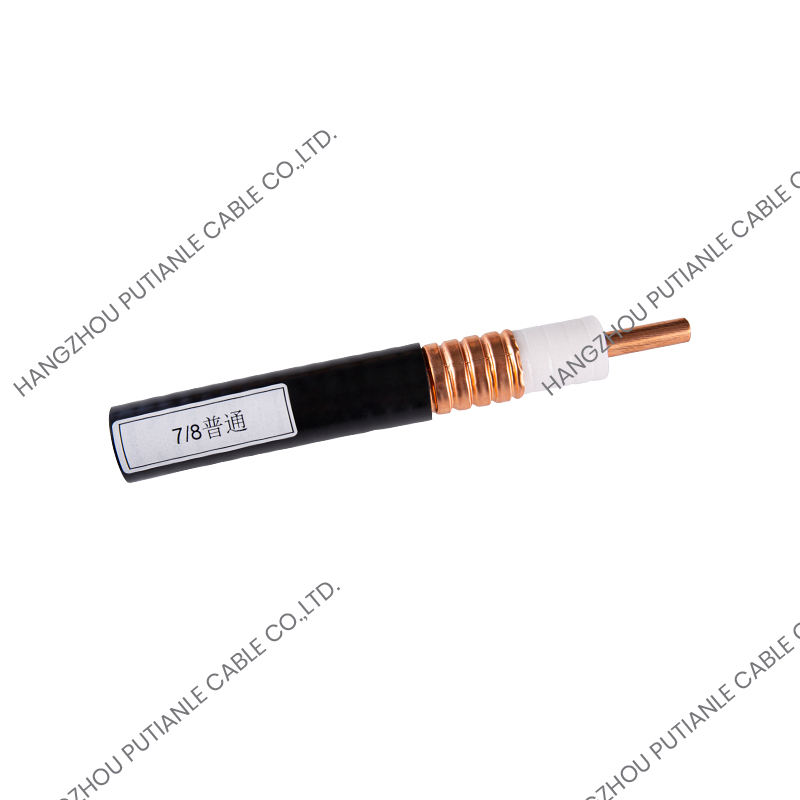
On the RF side, 50 ohm feeders carry signals between radios and antennas, and in-building distributed antenna systems often share risers with other services. Where a feeder crosses a fire compartment, the conversation is less about the cable burning and more about what happens at the penetration, which is why we spend time on connectors too, including the N-type male RF connector used across our 1/2 inch and 7/8 inch ranges.
Fiber carries its own advantage. Glass does not burn, and a fiber backbone between floors or buildings removes a whole class of risk from the horizontal copper runs. The sheath still has to meet the flame and smoke requirement, but the signal path itself is immune to the electrical failure modes that catch copper during a fire.
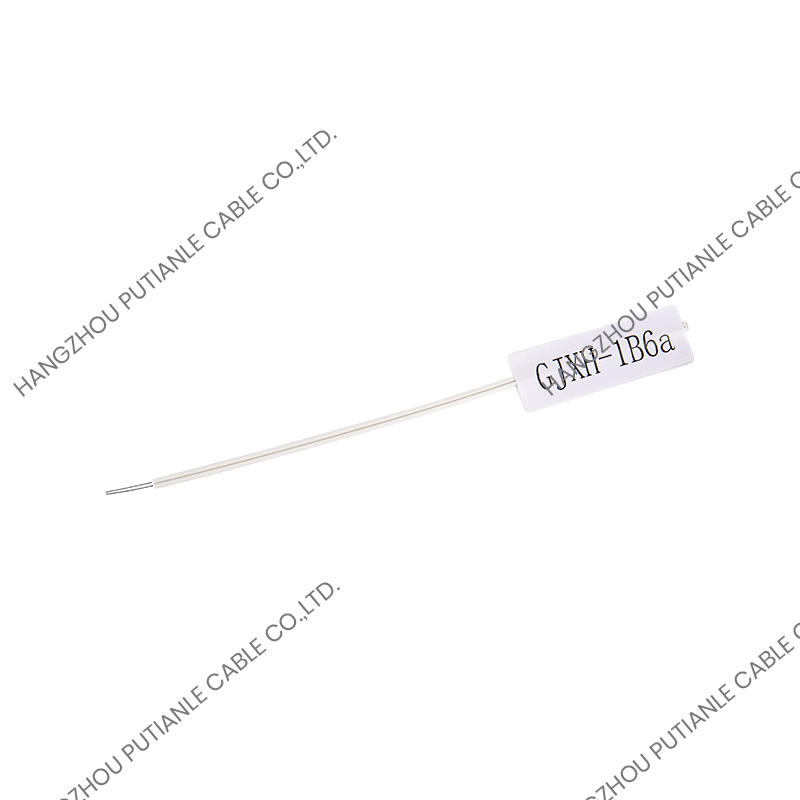 GJXH-FIBER Ultra-Pure Glass Core Optical CableThis ultra-pure glass core fiber optic cable supports high-bandwidth, low-loss transmission for long-haul and local network backbones.View Product →
Three misunderstandings we still run into
- "Fire resistant means fireproof." It means rated for a period of time under a defined test, nothing more.
- "Any fire rated cable will do." The rating has to match the standard the project is inspected against, and the electrical characteristics still have to suit the system.
- "Flame retardant is close enough." It is not, if the circuit has to keep working. The two properties answer different questions.
A last word
Fire resistant cables are one of the few components in a building bought for the worst day rather than the average one. Getting them right is mostly a matter of asking precise questions early: how long, tested to what, installed where, and inspected by whom. Answer those four and the specification usually writes itself, with less guesswork and less overspend.
If you are working through a project and the fire performance requirement is still fuzzy, we are glad to talk it through against the actual cable route.