中文简体
中文简体 English
 Español
Content
- 1 Understanding 75 Ohm Impedance and Its Applications
- 2 Braiding Construction and Shielding Effectiveness
- 3 Common 75 Ohm Braiding Cable Types
- 4 Performance Characteristics Comparison
- 5 Installation Best Practices for Braided 75 Ohm Cables
- 6 Troubleshooting Common Issues with Braided Cables
- 7 Selecting the Right Cable for Your Application
- 8 Future Trends in 75 Ohm Cable Technology
75 ohm braiding cables represent a specialized category of coaxial cables designed primarily for video signal transmission, cable television distribution, and specific RF applications where this impedance standard delivers optimal performance. Unlike their 50 ohm counterparts used predominantly in radio frequency and telecommunications, 75 ohm cables excel in applications requiring minimal signal reflection and maximum signal quality over moderate distances. The braiding component provides essential electromagnetic shielding that protects sensitive video and data signals from external interference while preventing signal leakage that could disrupt nearby equipment. Understanding the construction, types, and applications of 75 ohm braiding cables enables professionals to make informed choices that ensure signal integrity and system reliability.
Understanding 75 Ohm Impedance and Its Applications
The 75 ohm impedance standard emerged from early television engineering where researchers discovered that this specific impedance value minimized signal reflections in video transmission systems. The impedance represents the characteristic resistance that electromagnetic waves encounter as they propagate through the cable, determined by the ratio of conductor diameter to shield diameter and the dielectric material properties. When source impedance, cable impedance, and load impedance all match at 75 ohms, signal reflections are minimized, ensuring maximum power transfer and cleanest signal delivery.
This impedance became standardized for broadcast television, cable TV systems, satellite receivers, and professional video equipment because it provides the optimal balance between signal loss and power handling for video frequencies ranging from a few megahertz to several gigahertz. The standard extends to digital video applications including HD-SDI, 3G-SDI, and 12G-SDI professional broadcast formats, as well as consumer applications like cable modems, satellite dishes, and antenna connections. Any impedance mismatch in these systems causes signal reflections that manifest as ghosting in analog video or bit errors in digital transmissions.
Braiding Construction and Shielding Effectiveness
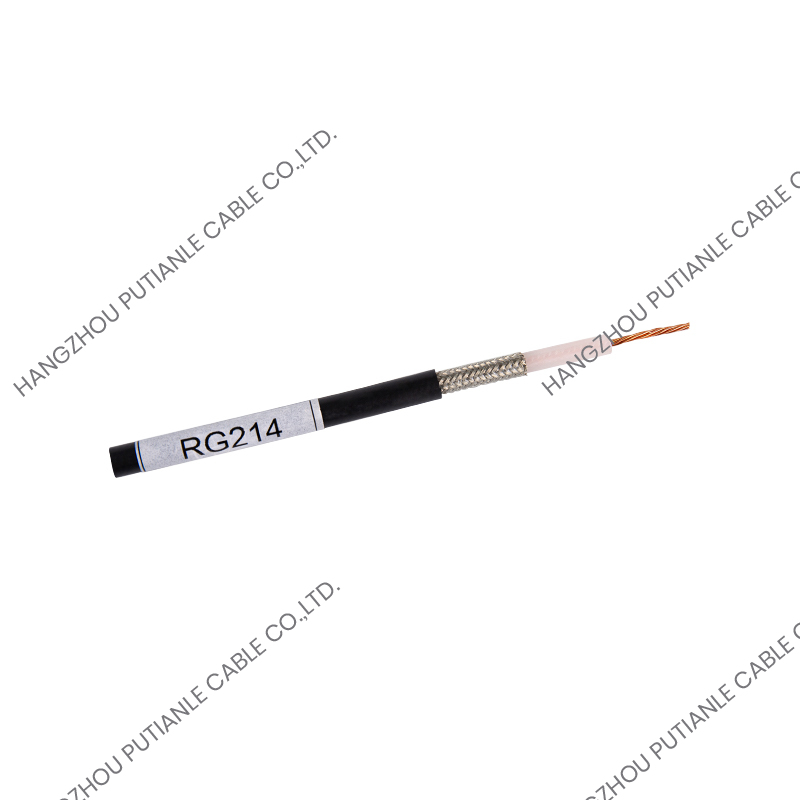
The braiding in 75 ohm cables consists of fine copper or tinned copper wires woven in a tubular pattern around the dielectric insulation that surrounds the center conductor. This braided shield serves multiple critical functions: it provides a return path for the signal current, shields the center conductor from external electromagnetic interference, and prevents the cable from radiating its signal into the surrounding environment. The braid construction allows flexibility while maintaining consistent electrical contact around the cable's circumference, unlike solid shields that would crack under repeated bending.
Shielding effectiveness, measured in decibels, indicates how well the braid attenuates external interference. A single braid typically provides 85-95% physical coverage of the dielectric, translating to approximately 60-80 dB of shielding effectiveness depending on frequency and construction quality. The percentage coverage represents the actual area covered by braid wires versus the total surface area, with higher coverage providing superior shielding. Braid construction variables including wire gauge, number of carriers, picks per inch, and weave angle all influence final shielding performance and cable flexibility.
Single Braid Versus Dual Braid Construction
Single braid 75 ohm cables provide adequate shielding for most residential and light commercial applications where interference levels remain moderate. The single braided shield offers good flexibility, reasonable cost, and sufficient protection for cable TV, satellite receivers, and basic video installations. These cables typically achieve shielding effectiveness of 60-75 dB, adequate for environments without significant electromagnetic interference from nearby equipment or power lines.
Dual braid or quad-shield constructions incorporate multiple shielding layers, alternating between braid and foil shields to achieve superior performance. A typical quad-shield cable includes an aluminum foil layer against the dielectric, followed by aluminum braid, another foil layer, and finally an outer copper or aluminum braid. This construction achieves shielding effectiveness exceeding 90-100 dB while maintaining 100% coverage, virtually eliminating interference in challenging electromagnetic environments. Professional broadcast facilities, hospitals with medical imaging equipment, and industrial settings with heavy electrical machinery benefit from this enhanced protection despite increased cable stiffness and cost.
Common 75 Ohm Braiding Cable Types
RG-6 Coaxial Cable
RG-6 represents the most common 75 ohm cable for residential and commercial video installations, featuring an 18 AWG (1.02mm) solid copper or copper-clad steel center conductor, foam polyethylene dielectric, and braided shield typically achieving 60-95% coverage depending on grade. The cable's 0.270-inch (6.9mm) outer diameter provides excellent balance between performance and handleability. Standard RG-6 uses single braid construction, while RG-6 quad-shield variants incorporate multiple shielding layers for enhanced performance in demanding environments.
This cable type dominates cable television distribution, satellite dish connections, over-the-air antenna installations, and cable modem systems. RG-6 delivers substantially lower signal loss compared to older RG-59 cables, particularly at frequencies above 50 MHz where modern digital services operate. The improved performance makes RG-6 the minimum acceptable choice for digital cable and satellite systems, with quad-shield versions preferred for long runs exceeding 100 feet or installations near interference sources.
RG-59 Coaxial Cable
RG-59 features a smaller 20 AWG (0.81mm) center conductor and 0.242-inch (6.15mm) overall diameter, making it more flexible than RG-6 but with higher signal attenuation. The thinner center conductor increases resistance, resulting in approximately 30-40% greater signal loss compared to RG-6 at typical video frequencies. While once standard for cable TV installations, RG-59 has largely been superseded by RG-6 for digital applications requiring longer cable runs or higher frequencies.
RG-59 remains useful for short-run applications under 50 feet, analog CCTV camera installations, composite video connections, and legacy systems where its smaller size and superior flexibility provide advantages. The cable costs less than RG-6 and handles easier in tight spaces, making it suitable for patch cables and temporary connections where ultimate performance is less critical than convenience and cost.
RG-11 Coaxial Cable
RG-11 provides the lowest loss among common 75 ohm cables through its larger 14 AWG (1.63mm) center conductor and 0.405-inch (10.3mm) outer diameter. This substantial construction delivers approximately 30-35% lower attenuation than RG-6, making it ideal for long cable runs exceeding 200 feet where signal loss becomes problematic. The larger diameter and reduced flexibility make RG-11 more challenging to install, particularly in residential settings with standard cable routing constraints.
Professional installations, campus-wide distribution systems, and trunk lines in cable TV networks utilize RG-11 where its superior performance justifies handling difficulties. The cable serves as backbone distribution between buildings or across large properties where multiple RG-6 drops branch to individual locations. For residential applications, RG-11 makes sense for exceptionally long runs from antenna or satellite dish to distribution amplifier, with RG-6 handling final distribution to individual rooms.
Precision Video Cables
Professional broadcast and production environments demand precision 75 ohm cables specifically engineered for high-definition and ultra-high-definition video signals. These cables feature tighter impedance tolerances (±1-2 ohms versus ±3-5 ohms for standard cables), superior velocity of propagation specifications, and enhanced shielding to meet rigorous broadcast standards. Construction typically includes precision-manufactured center conductors, low-loss foam or cellular polyethylene dielectics, and multiple shielding layers achieving 100 dB or better isolation.
Brands like Belden, Canare, and Gepco produce broadcast-grade 75 ohm cables certified for HD-SDI, 3G-SDI, and 12G-SDI applications carrying uncompressed video at data rates up to 12 Gbps. These cables maintain signal integrity over distances exceeding 300 feet for HD signals and 150 feet for 4K UHD signals without equalization or signal regeneration. The premium construction and performance verification come with significantly higher costs justified only in professional applications where signal quality directly impacts production value and broadcast standards compliance.
Performance Characteristics Comparison
| Cable Type | Center Conductor | Loss at 1 GHz | Shield Coverage | Best Application |
| RG-59 Single | 20 AWG | 7.5 dB/100ft | 60-85% | Short runs, CCTV |
| RG-6 Single | 18 AWG | 5.5 dB/100ft | 60-95% | Cable TV, satellite |
| RG-6 Quad | 18 AWG | 5.8 dB/100ft | 100% | High interference areas |
| RG-11 | 14 AWG | 3.8 dB/100ft | 60-95% | Long runs, trunks |
| Precision HD | 18-20 AWG | 4.5 dB/100ft | 100% | Broadcast, production |
Installation Best Practices for Braided 75 Ohm Cables
Proper Bending and Routing
Maintaining proper bend radius during installation ensures braided shield integrity and prevents impedance variations that degrade signal quality. Each cable type specifies minimum bend radius, typically 5-10 times the cable's outer diameter. Exceeding this minimum—bending too sharply—compresses the dielectric, distorts the center conductor position, and can break individual braid wires, compromising shielding effectiveness. Use gradual sweeping bends rather than tight corners when routing cables around obstacles, and secure cables to prevent stress on bends during service life.
Avoid running 75 ohm cables parallel to AC power lines for extended distances, as electromagnetic fields from power wiring can induce interference despite braided shielding. When power and signal cables must cross, do so at 90-degree angles to minimize coupling. Maintain separation of at least 6 inches from power wiring when parallel runs are unavoidable, increasing distance in high-power environments or when using single-braid cables with lower shielding effectiveness. Use cable clips or ties specifically designed for coaxial cable that support without crushing or deforming the round cross-section.
Connector Installation and Termination
Proper connector installation critically impacts system performance, as poorly terminated connectors introduce impedance mismatches, signal reflections, and potential interference entry points. F-connectors dominate residential and commercial 75 ohm installations due to their threaded coupling, reliable performance, and cost-effectiveness. Compression F-connectors provide superior performance compared to crimp or twist-on types, creating gas-tight seals that prevent moisture intrusion and ensure consistent electrical contact with the braided shield.
Professional video applications utilize BNC connectors offering quick-connect convenience and excellent performance to 4 GHz or beyond. Proper BNC installation requires careful cable preparation, ensuring the braided shield makes complete contact with the connector body while the center conductor extends precisely to specification. Precision video cables often use factory-installed connectors rather than field terminations, as specialized equipment and training ensure consistent impedance and return loss meeting broadcast standards. When field termination is necessary, use high-quality connectors designed specifically for your cable type and follow manufacturer instructions precisely to achieve specified performance.
Troubleshooting Common Issues with Braided Cables
Signal Quality Problems
Degraded video quality, tiling in digital signals, or intermittent reception often trace to cable or connector problems rather than equipment failures. Excessive signal loss from cable runs exceeding recommended lengths for the cable type manifests as weak or unreliable reception. Calculate total cable loss including connectors and splitters, ensuring received signal strength meets equipment minimum requirements. If loss exceeds acceptable limits, upgrade to larger cable like RG-11, reduce run length, or install distribution amplifiers to compensate.
Impedance mismatches from damaged cables, improper connectors, or mixed cable types create signal reflections visible as ghosting in analog video or packet loss in digital systems. Use a time-domain reflectometer (TDR) or cable tester to identify impedance discontinuities along cable runs. Common causes include kinked or crushed cables, water-damaged sections, or incompatible connectors. Replace damaged sections and verify all connections use proper 75 ohm components throughout the signal path.
Interference and Shielding Failures
Interference appearing as snow, lines, or digital artifacts despite adequate signal strength indicates shielding problems allowing external signals to couple into the cable. Damaged braided shields from improper installation, rodent damage, or connector failures create openings for interference entry. Inspect cable routes for physical damage, paying particular attention to areas where cables pass through walls, ceilings, or conduits where abrasion can damage jackets and expose shields.
- Check all connectors for proper shield contact and tight connections
- Verify cable jackets remain intact with no exposed shield areas
- Identify interference sources like motors, fluorescent lights, or radio transmitters
- Upgrade to quad-shield cable in high-interference environments
- Ensure proper grounding of cable shield at entry points per electrical code
Selecting the Right Cable for Your Application
Choosing appropriate 75 ohm braiding cable requires analyzing specific application requirements including signal type, frequency range, cable length, environmental conditions, and interference potential. For residential cable TV and satellite installations under 150 feet, RG-6 single-braid or dual-shield cable provides adequate performance at reasonable cost. Upgrade to RG-6 quad-shield in areas with significant electrical interference from nearby power lines, radio transmitters, or industrial equipment that could compromise signal quality.
Professional video production demands precision cables with tight impedance tolerances and verified performance specifications matching equipment requirements. HD-SDI signals require cables certified for 1.5 Gbps operation, while 4K production utilizing 12G-SDI needs cables verified to 12 Gbps with appropriate equalization for intended cable lengths. Long-run applications exceeding 200 feet benefit from RG-11 trunk cables feeding RG-6 distribution to individual locations, balancing performance against installation complexity.
Consider future requirements when selecting cable, as infrastructure upgrades prove expensive and disruptive. Installing quad-shield RG-6 or RG-11 during initial construction provides headroom for signal quality and supports future services requiring higher frequencies or data rates. Outdoor installations require direct burial or UV-resistant jackets rated for environmental exposure, while plenum-rated cables meet fire safety requirements for air-handling spaces. By carefully evaluating these factors and selecting quality cables from reputable manufacturers, installations deliver reliable performance throughout their service life while supporting current and future technology requirements.
Future Trends in 75 Ohm Cable Technology
While fiber optic technology continues expanding in telecommunications and data networks, 75 ohm coaxial cables remain essential for specific applications where their characteristics provide advantages. The broadcast industry continues relying on 75 ohm infrastructure for uncompressed video transmission where coaxial cables offer simplicity, reliability, and performance without requiring complex optical-to-electrical conversion. Emerging standards like 25G-SDI and beyond will demand enhanced cable performance, driving development of improved dielectric materials and shielding techniques that extend coaxial capability to higher frequencies and data rates.
Hybrid cables combining 75 ohm coaxial with fiber optic elements or power conductors provide integrated solutions reducing installation complexity and cost. These assemblies support equipment requiring both video signals and power delivery through single cable runs. Environmental concerns drive development of cables using recyclable materials and lead-free construction while maintaining electrical performance. As technology evolves, 75 ohm braiding cables will continue adapting to serve applications where their unique combination of performance, cost-effectiveness, and proven reliability makes them the optimal choice for signal transmission.