中文简体
中文简体 English
 Español
Content
What Is a 75 Ohm Aluminum Tube Cable and Where Is It Used?
In the world of broadband signal transmission, coaxial cable technology spans a wide range of designs — from flexible drop cables used inside buildings to rigid, high-performance trunk lines that form the backbone of cable television and telecommunications networks. Among these, the 75 ohm aluminum tube cable occupies a specific and important position. It is a hardline coaxial cable engineered for low signal loss over long distances, and it is the preferred solution in applications where performance, mechanical rigidity, and long service life matter more than flexibility. Understanding what this cable is, how it is built, and what makes it different from standard coaxial alternatives helps engineers, network planners, and procurement teams make better-informed decisions.
What Is a 75 Ohm Aluminum Tube Cable?
A 75 ohm aluminum tube cable is a type of hardline coaxial cable in which the outer conductor is a seamless or corrugated aluminum tube rather than a braided or foil shield. The 75 ohm figure refers to the characteristic impedance of the cable — a fundamental electrical property that defines how the cable interacts with the signal being transmitted and must match the impedance of the connected equipment to prevent signal reflection and loss.
The 75 ohm impedance standard is dominant in video signal distribution, cable television (CATV), satellite systems, and broadcast infrastructure. This distinguishes it from the 50 ohm standard used in radio frequency (RF) transmission systems, two-way communications, and data networking. When a 75 ohm aluminum tube cable is specified, it is almost always in a context where high-frequency video or broadband RF signals need to travel reliably over significant distances with minimal attenuation.
Construction and Physical Structure
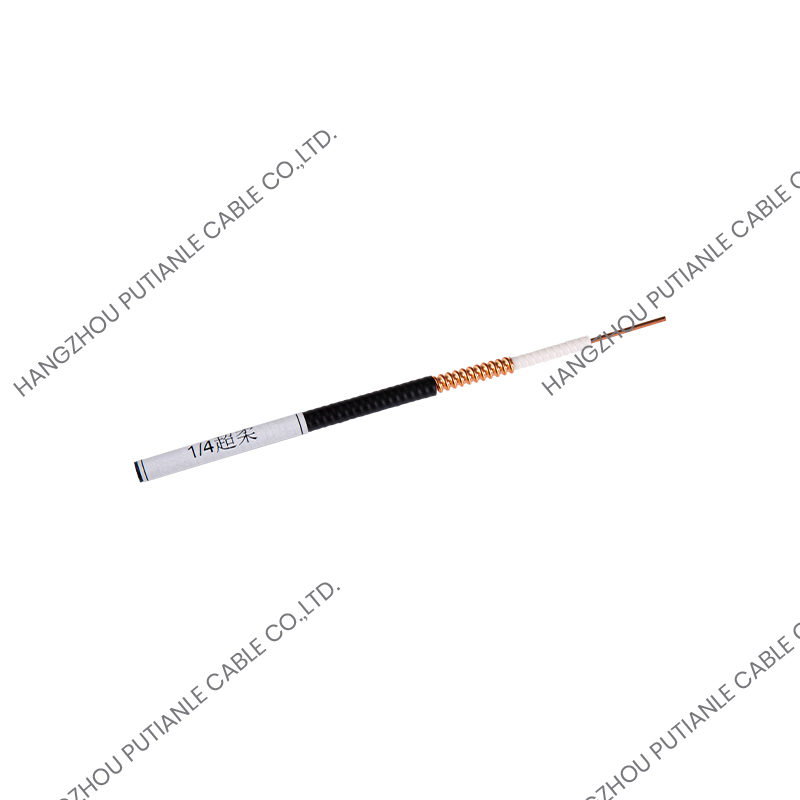
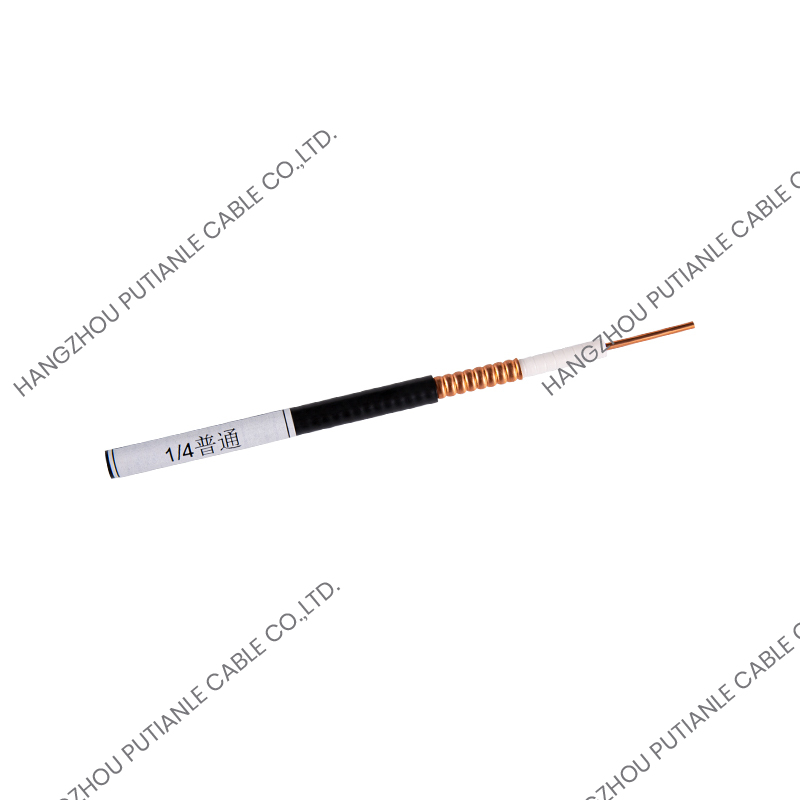
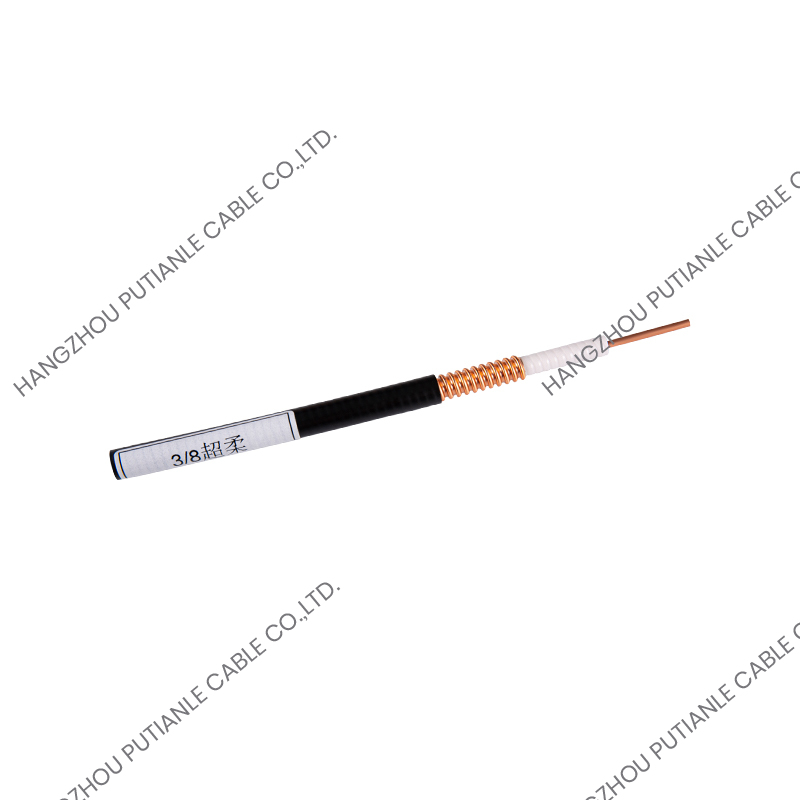
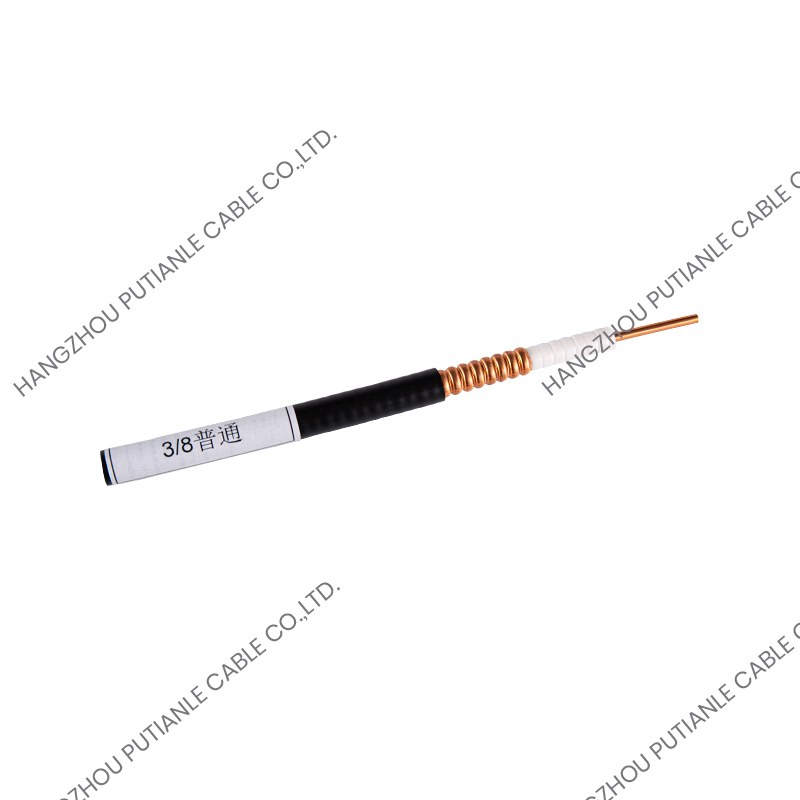
The construction of a 75 ohm aluminum tube cable follows a coaxial geometry — concentric layers centered on a common axis — but with considerably more robust materials than standard flexible coaxial cables. Each layer has a specific electrical or mechanical function.
Inner Conductor
The center conductor is typically a solid copper or copper-clad aluminum (CCA) wire. Solid copper provides the best conductivity and is used in premium or broadcast-grade applications. Copper-clad aluminum reduces weight and cost while maintaining adequate high-frequency performance, because RF signals travel primarily along the outer surface of the conductor (the skin effect), where the copper cladding is located. The diameter of the inner conductor, in combination with the dielectric and outer conductor geometry, determines the cable's characteristic impedance.
Dielectric
The dielectric is the insulating layer between the inner and outer conductors. In aluminum tube cables, the dielectric is most commonly solid or foam polyethylene (PE). Foam PE has a lower dielectric constant than solid PE, which reduces signal velocity loss and lowers attenuation at high frequencies. Some high-performance designs use a gas-injected or air-spaced dielectric for even better electrical performance, though these are more complex to manufacture and terminate. The dielectric must be dimensionally stable across the cable's operating temperature range to maintain consistent impedance.
Aluminum Tube Outer Conductor
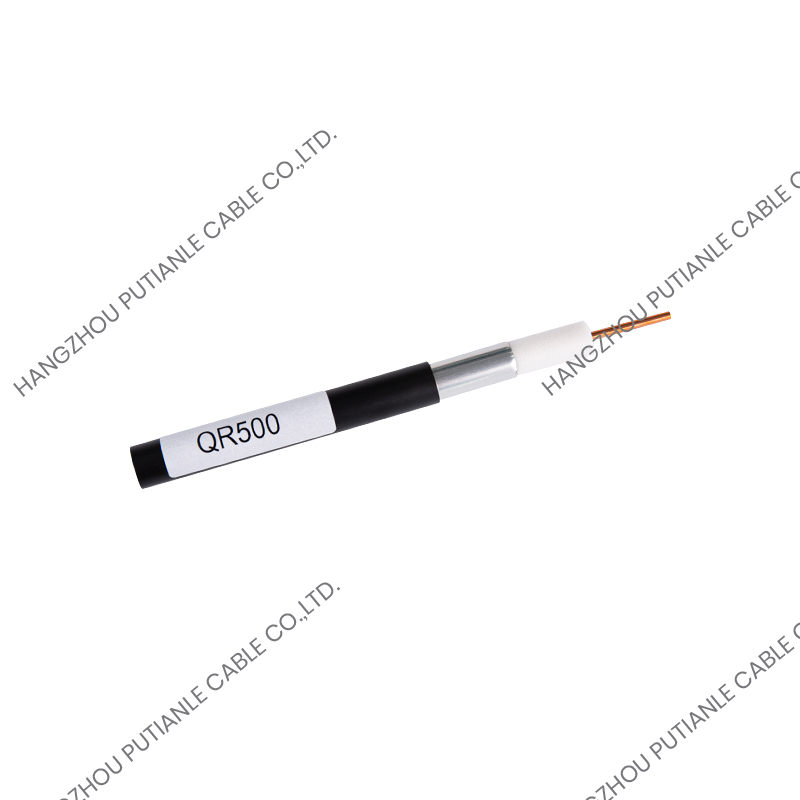
The defining feature of this cable type is its outer conductor: a continuous aluminum tube rather than a woven braid or spiral wrap. This tube is either smooth-walled or corrugated. Smooth aluminum tube cables are stiffer and used in applications where the cable runs in fixed, straight or gently curved routes. Corrugated aluminum tube cables have a helical or annular corrugation formed into the tube wall, which adds mechanical flexibility while retaining the shielding integrity of a solid conductor. The corrugated design is more common in outdoor trunk and feeder applications where some degree of bending during installation is necessary. The solid aluminum outer conductor provides shielding effectiveness far superior to braided shields, typically exceeding 100 dB of isolation — critical in environments where signal ingress or egress would cause interference.
Outer Jacket
The outer jacket is an extruded plastic sheath — most commonly polyethylene or a UV-stabilised polyethylene compound for outdoor use. The jacket protects the aluminum tube from moisture ingress, physical damage, and environmental degradation. Black PE jacket is standard for aerial and direct-burial outdoor installations due to its UV resistance. Some cables intended for indoor or plenum-rated applications use alternative jacket materials to meet fire rating requirements.
Key Electrical Specifications
The electrical performance of a 75 ohm aluminum tube cable is defined by several interdependent parameters. These specifications are what distinguish different cable sizes and grades from one another and determine suitability for a given application.
| Parameter | Typical Value / Range | Significance |
| Characteristic Impedance | 75 Ω ± 1 Ω | Must match system impedance to minimise reflections |
| Attenuation (500 MHz) | ~2–5 dB/100 m (size-dependent) | Lower values allow longer spans between amplifiers |
| Velocity of Propagation | 85–88% (foam PE dielectric) | Affects signal timing and cable delay calculations |
| Shielding Effectiveness | >100 dB | Prevents signal ingress and egress (interference control) |
| Operating Frequency | Up to 3 GHz (CATV); up to 6+ GHz (broadcast) | Must cover the full signal bandwidth of the system |
| Return Loss | >23 dB typical | Indicates impedance consistency along the cable length |
Attenuation increases with frequency, which is why a cable rated at low loss for a 500 MHz signal will show higher loss at 1 GHz or 3 GHz. When selecting a cable size for a CATV or broadband network, the attenuation figure at the highest operating frequency in the system is the relevant design parameter, not the attenuation at the lowest frequency.
Common Cable Sizes and How They Compare
75 ohm aluminum tube cables are manufactured in a range of standard outer diameters, each offering a different balance of attenuation, flexibility, and physical size. The most widely used sizes in CATV and broadband networks follow a naming convention based on the outer diameter of the aluminum tube in hundredths of an inch, though metric designations are also common in European and Asian markets.
| Cable Size | Outer Diameter (approx.) | Relative Attenuation | Typical Use |
| 412 / QR 412 | ~12 mm | Higher | Short feeder runs, distribution nodes |
| 500 / QR 500 | ~17 mm | Medium | Feeder cables, medium-distance trunk runs |
| 625 / QR 625 | ~21 mm | Lower | Long-distance trunk lines |
| 750 / QR 750 | ~25 mm | Lowest | High-capacity trunk, headend interconnects |
Larger diameter cables have lower attenuation per unit length, allowing longer spans before an amplifier is required. However, they are heavier, less flexible, require larger bend radii, and cost more per metre. Network design involves balancing these trade-offs against the required span lengths, amplifier spacing targets, and installation constraints at each point in the network.
Applications of 75 Ohm Aluminum Tube Cable
The primary domain for 75 ohm aluminum tube cable is cable television and broadband network infrastructure, where it has been the standard trunk and feeder medium for decades. Beyond CATV, it appears in several related applications:
- CATV trunk and feeder networks: The backbone of hybrid fiber-coaxial (HFC) networks uses aluminum tube hardline to carry broadband signals from fiber nodes to distribution points, covering spans of several hundred metres between active amplifiers.
- Broadcast facility interconnects: Television broadcast facilities use 75 ohm hardline for long internal cable runs between studios, equipment rooms, and transmission equipment where signal integrity over distance is critical.
- Satellite ground stations: Large dish antenna installations use hardline runs to connect the dish-mounted low-noise block (LNB) downconverters to indoor receiving equipment, minimising signal loss over long cable paths.
- RF signal distribution in large venues: Stadiums, airports, and large commercial buildings use distributed antenna systems (DAS) that incorporate 75 ohm hardline segments for low-loss signal transport across the facility.
- Headend and hub interconnects: Within cable network headend facilities, short runs of rigid hardline provide high-isolation, low-loss connections between signal processing equipment where braided coaxial cables would introduce unacceptable leakage or loss.
What to Check Before Buying
Specifying and sourcing 75 ohm aluminum tube cable involves confirming several technical and logistical details that have a direct impact on system performance and installation success.
- Confirm the cable size and attenuation spec: Match the cable diameter to your required span length and amplifier spacing. Use the attenuation figure at your system's highest operating frequency — not the nominal or mid-band figure — as your design parameter.
- Smooth vs. corrugated outer conductor: Specify corrugated tube for runs that require bending or routing around obstacles. Smooth tube is appropriate only for perfectly straight or very gently curved fixed routes. Using smooth tube where corrugated is needed results in cracking or kinking during installation.
- Inner conductor material: Solid copper inner conductors provide better DC resistance and lower attenuation than copper-clad aluminum, which is significant for systems that power amplifiers through the cable (power passing). Confirm whether the application requires power-passing capability before specifying CCA.
- Connector compatibility: Aluminum tube hardline requires specific connector types that match the cable size and outer conductor geometry. Verify that the connectors and any passive components (taps, splitters, amplifiers) are rated for the same cable size and impedance.
- Environmental and installation ratings: Confirm the jacket material is rated for the installation environment — UV-stabilised PE for aerial or outdoor exposed runs, flooded or gel-filled designs for direct-burial applications, and appropriate fire-rated jackets for indoor riser or plenum installations.
- Compliance with relevant standards: Reputable cable should be manufactured to recognised standards such as SCTE (Society of Cable Telecommunications Engineers) specifications, IEC 61196, or equivalent national standards. Request test data or third-party test reports for attenuation, return loss, and shielding effectiveness before accepting a large shipment.
75 ohm aluminum tube cable is a precision-engineered product where substituting an unverified alternative to reduce cost carries genuine performance risk. In a CATV or broadband network, the cost of the cable itself is typically a small fraction of total project cost — far less than the cost of network downtime, signal quality complaints, or re-cabling sections of a failed installation. Getting the specification right at the procurement stage is always the more economical approach in the long run.