中文简体
 English
 Español

Content
- 1 What Makes a Cable Fire Resistant?
- 2 How a Fire-Resistant Cable Is Built
- 3 Fire Resistant and Flame Retardant Are Not the Same Thing
- 4 Where Fire-Resistant Cables Earn Their Keep
- 5 Standards and Testing You Will Meet
- 6 Choosing the Right Cable for Your Project
- 7 Misunderstandings Worth Clearing Up
- 8 Where We Fit In
Fire resistant cables do one job that most cables never have to think about: they keep a circuit alive while the building around it is burning. Signal quality, flexibility and cost all matter, but they come second to that single promise.
That promise is why these cables sit behind fire alarms, emergency lighting, voice evacuation, lift intercoms, tunnel ventilation controls and the cameras that let responders see what is happening. If the cable fails at minute ten, the system it feeds becomes decoration. We have spent years building coaxial, fibre and feeder cable for networks where that cannot happen, and the questions engineers bring to us are refreshingly practical: how long, at what temperature, tested how, and installed with what?
This guide covers how fire-resistant construction actually works, why it is not the same thing as flame retardant, which standards you will meet in a specification, and the small details that decide whether a compliant cable still performs after it is installed.
What Makes a Cable Fire Resistant?
Fire resistance, in cable terms, means circuit integrity: the cable keeps carrying its signal or its power for a defined period under fire conditions. It is a performance statement rather than a material one, and two designs dominate the market.
The barrier route. Mica tape is wrapped around the conductor, usually beneath the insulation. At normal temperatures it is a passive layer that does nothing in particular. Under flame, the mica flakes sinter into a rigid ceramic shell that keeps conductor and earth apart even after the polymer around it has melted or burned away. It is simple, proven, and the reason most building-grade fire resistant cables work.
The ceramic-forming route. Silicone or silicone-like compounds with mineral fillers serve as the insulation itself. When they burn, they leave a ceramic ash that still insulates. This approach holds up better under higher temperatures and mechanical shock, which is why it appears in industrial, marine and tunnel installations.
Everything else in the cable exists to support those two mechanisms. Stranded copper tolerates the thermal expansion of a fire without cracking. A metal screen, an armour layer, or, in coaxial designs, a copper or aluminium tube acts as a physical barrier and holds the geometry together. The outer sheath, usually a low smoke zero halogen compound, is there to stop the cable from becoming fuel and to keep the smoke breathable and non-corrosive while people are still getting out.
How a Fire-Resistant Cable Is Built
Conductor
Annealed stranded copper is the norm. Solid conductors are stiffer and less forgiving of the movement that a fire creates, so stranded construction is preferred wherever vibration or thermal cycling is expected.
Insulation and fire barrier
Mica tape, ceramic-forming silicone or a combination of both. The tape overlap and the number of layers decide how long the barrier survives, which is why two cables that look identical from the outside can carry very different ratings.
Screening and metallic layers
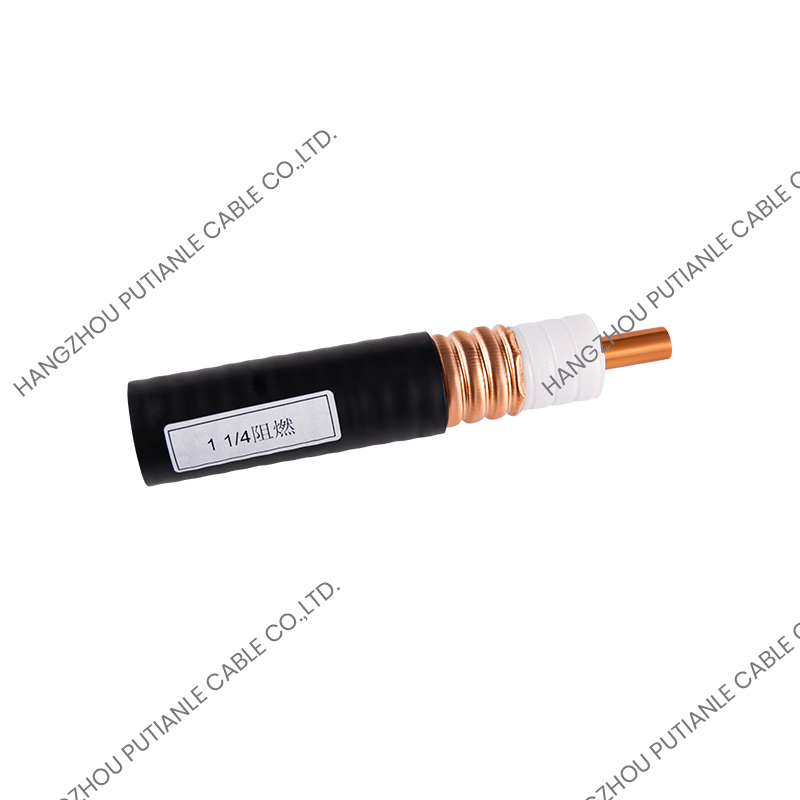
In coaxial cable this layer is the outer conductor: a braid, or a corrugated copper or aluminium tube. Metal does not burn, so a tube-style outer conductor keeps the concentric geometry intact far longer than a foil and braid combination. That is one reason tube constructions are favoured for tunnel and metro feeder runs.
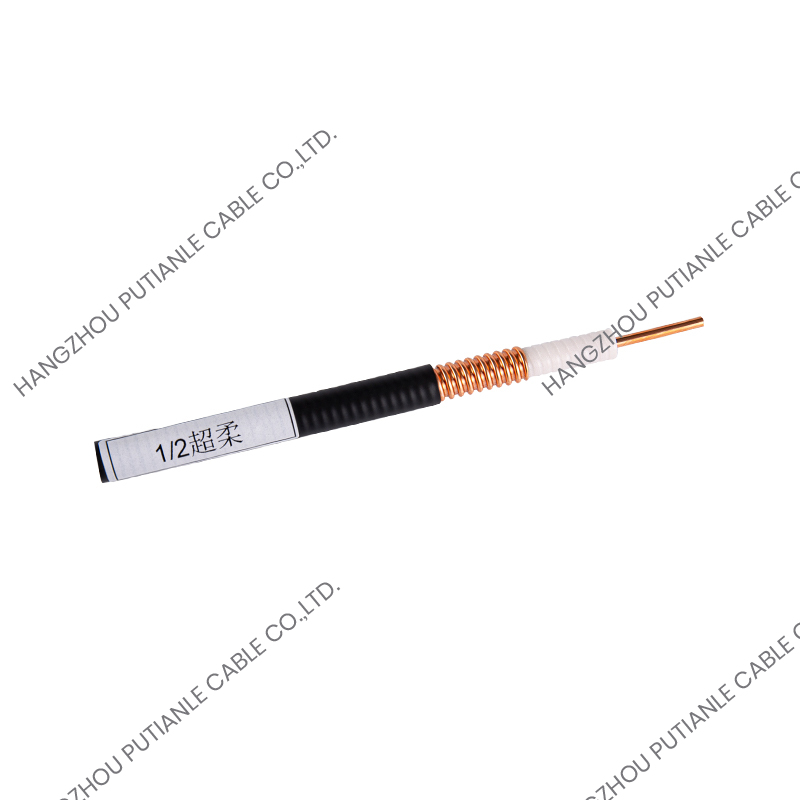 1/2-Inch Super Flexible Corrugated Copper Tube Coaxial CableFlexible 50-ohm coaxial cable with corrugated copper tube construction for robust EMI shielding and repeated flexing in high-vibration installations.View Product →
Outer sheath
Halogen-free, low smoke compounds limit acid gas and visual obscuration. Sheath colour is a local convention, not a rating, so red or orange jacketing tells you nothing about performance unless the test certificate says so.
Fire Resistant and Flame Retardant Are Not the Same Thing
These two words get swapped constantly in tender documents, and the swap has consequences. A flame-retardant cable slows the spread of fire along its own length. A fire-resistant cable keeps working while the fire is happening. Many projects need both properties in the same product, but they are tested and judged separately.
| Behaviour | Flame retardant | Fire resistant |
|---|---|---|
| Main purpose | Limit flame spread along the cable | Maintain circuit integrity during fire |
| Typical test | IEC 60332-1-2, IEC 60332-3 series | IEC 60331, EN 50200, BS 6387 |
| In a fire | May char and stop conducting | Expected to keep conducting for 30 to 120 minutes |
| Common use | General power and control routes | Alarms, evacuation, pumps, tunnel systems |
| Sheath focus | Flame-retardant filler systems | LSZH plus a barrier or ceramic layer |
Where Fire-Resistant Cables Earn Their Keep
Life safety systems are the obvious answer, but the interesting work happens where the environment is already hostile: tunnels, car parks, plant rooms and industrial sites where a fire is compounded by heat, vibration, water and corrosive gases.
- Fire detection and alarm loops, including the sounder circuits that have to stay live.
- Emergency lighting and illuminated exit signage.
- Voice alarm and public address systems used for evacuation.
- Smoke control, pressurisation fans and fire pumps.
- Lift emergency phones and automatic door release circuits.
- Tunnel and metro systems, where radio coverage itself has to survive.
- Video surveillance feeding a control room during an incident.
Two of these deserve a closer look because the cable choice is less obvious than it seems. In road and rail tunnels, radio coverage is delivered along the bore by a radiating feeder rather than an antenna, so the feeder is part of the life safety chain and is often specified with fire performance and low smoke in mind.
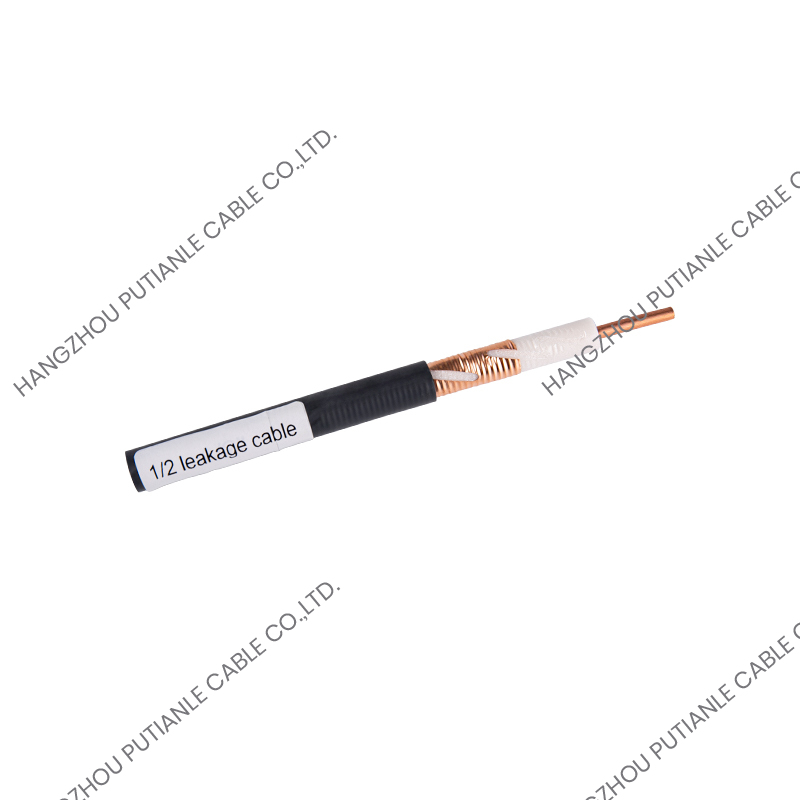 1/2-Inch Compact Leakage Feeder CableCompact leakage feeder for in-building wireless coverage, designed to radiate and receive signals for more uniform coverage where antennas are impractical.View Product →
For CCTV and alarm video, the 75 ohm coaxial run between camera and headend is frequently the weakest link in an otherwise protected system. A braided RG6 with a halogen-free jacket is a sensible baseline for interior routes, provided the containment and supports are rated for the same duty.
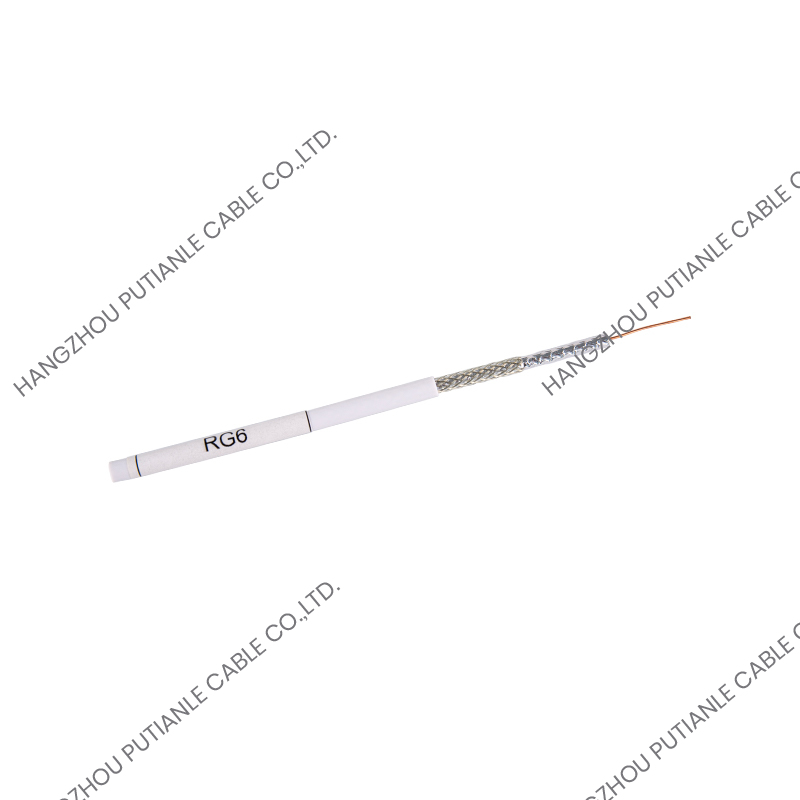 RG6 75-Ohm Braided Coaxial CableCost-effective RG6 coaxial cable with 75-ohm impedance, flexible jacket and copper core, suited to CCTV, TV and routine commercial installations.View Product →
Standards and Testing You Will Meet
No single global standard covers fire-resistant cable, so specifications usually stack several. The core ones are worth knowing by name.
- IEC 60331 series — circuit integrity under flame, generally at 750 °C and above, with variants that add mechanical shock or water spray.
- EN 50200 — the European counterpart, rated PH 30, 60, 90 or 120 for minutes of survival with shock.
- BS 6387 — categories C, W and Z for fire alone, fire with water, and fire with mechanical shock; CWZ is the toughest combination.
- IEC 60754 and IEC 61034 — acid gas emission and smoke density, the pair that decides whether people can see and breathe.
- EN 50575 (CPR) — the construction products regulation classes, from Aca down to Fca, covering reaction to fire for cables sold into EU projects.
The classification language can be dense, especially around reaction-to-fire grading. If you want a plain-language footing before reading a certificate, our note on IEC flame-retardant grades is a reasonable starting point. Always match the certificate to the exact product code and diameter, not just to the family name.
Choosing the Right Cable for Your Project
Most specification errors happen before anyone looks at a datasheet. Work through these in order and the shortlist usually writes itself.
- Define what must keep working, for how long, and what happens if it stops.
- Identify the standard your authority or client actually enforces, and the test duration it implies.
- Describe the environment: wet, dusty, corrosive, vibrating, tight bend radius, rodent pressure.
- Confirm the sheath requirement, particularly in occupied spaces and tunnels where smoke density governs.
- Check the whole chain, including glands, clips, fire stops and terminations rated to the same level.
- Size the conductor for voltage drop on emergency loads, not just for current.
- Ask for test reports and a sample length before the first drum ships.
Misunderstandings Worth Clearing Up
- Fire resistant does not mean fireproof. It buys time, measured in minutes, under defined conditions.
- The cable alone is not a system. Inadequate supports and unsealed penetrations undo a good product quickly.
- Thicker is not automatically better. Barrier construction and taping quality matter more than jacket bulk.
- Jacket colour is not a rating. Read the standard reference on the print legend.
Where We Fit In
Hangzhou Putianle Cable has been manufacturing in Lin'an, the cable town of Zhejiang, since 2003. Our work centres on 50 ohm and 75 ohm coaxial cable, RF feeders, fibre optic cable, leakage feeder, connectors and jumper assemblies, with the cable constructions, jacket compounds and screening options that life safety and broadcast routes tend to require.
If a specification names a fire class you are unsure how to meet, send us the standard, the environment and the run length. We will tell you honestly which constructions suit it, which do not, and where a joint or a transition needs attention. That conversation is usually shorter than the rework it prevents.
Fire resistant cable is never the most visible part of a project. It sits in trays, behind ceilings and under tunnel walkways, and on a normal day nobody gives it a second thought. The value shows up on the day everything else fails, when an alarm still sounds, a camera still streams and a ventilation fan still turns because someone specified the right cable and installed it properly.
Choose for the worst hour, not the average one, and the rest of the system has a chance to do its job.